

Give Your Team An Off-Season Basketball Tune Up
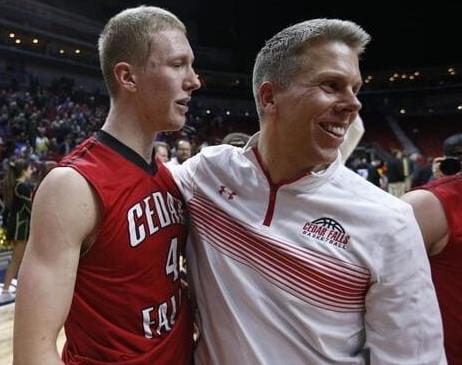
I was recently talking with one of the most successful basketball coaches in Iowa High School history, Ryan Schultz, who just came off a 3rd State Title after going undefeated this past season.
He mentioned that one thing he does every off-season is a program check-up. Looking at the health of different areas of his program from top to bottom.
Coach Schultz mentioned there was never one off-season in his 13 Years as head coach that he did not make several changes to implement in the upcoming season.
And the tune up seems to have paid serious dividends for Ryan and his Cedar Falls team!
10 Areas To Evaluate This Offseason
The offseason is one of the best times not only for players to improve…but for coaches to improve their program.
This is when you can step back, look honestly at what happened during the season, and ask the questions that are harder to answer when you are in the middle of practices, games, scouting reports, travel, and everything else that comes with the season.
You do not always need a complete overhaul.
In fact, most teams do not need to change everything.
But every coach should be looking for small ways to improve.
1. Analyze Your Offense
Start with your offensive identity.
Are you happy with your offense?
Does it fit your personnel?
Did you score consistently?
Did it create the types of shots you wanted?
Did it hold up against better teams?
If your offense was efficient in scoring, you may not need to overhaul the entire thing.
Maybe your man offense is solid, but your zone offense is not good enough.
Maybe your base offense works, but you need a few better quick hitters.
Maybe your team gets good shots, but not from the right players.
Maybe your spacing breaks down when teams pressure you.
The offseason is the time to ask: Where is the weakness in our offense, and how can we improve it?
Also look at shot selection.
Where did your shots come from? Were you getting layups, paint touches, free throws, rhythm threes, and shots from your best players?
Or were you taking too many rushed, contested, low-percentage shots?
If you are getting the shots you want from your offense, it isn’t necessarily the offense that needs to be replaced, it might be some of the skill development or practice drills you want to update.
How important is this piece? For Ryan Schultz and Cedar Falls HS, it was huge.
10 years ago he realized his motion offense went East and West instead of getting downhill North and South to the basket. He implemented a completely new Hybrid Attack -Motion & Dribble Drive combination offense and it helped propel his teams to the 3 State Titles!
Just ask Coach Schultz…don’t skip this step!
2. Define Your Defensive Identity
Your defense needs a strong identity.
What do we want to be defensively?
Are you a pressure team?Full court, 3/4 court or half court?
A half-court man team? No- Middle? Force Left Defense?
A zone team? 2-3 Zone, 1-3-1 Zone, Match-Up Zone?
A trapping team? 2-3 Half-Court Buzz? Full-Court
More importantly, has your defense this past year been a strength for your team.
If it has not, look at personnel and style of play/goals of your defense.
Personnel -
will you play a lot of kids?
are you athletic?
do you have size?
Style of play and goals
do you want to speed teams up?
slow teams down?
forces turnovers?
force quick shots
Use this to help guide you to a better fitting defense. For example, if you are trying to speed teams up and play fast, maybe you want a Man Left Defense that keeps the ball on one side of the floor and forces quick shots.
Try to implement a defense that fits your personnel and style of play this year.
Mix & Match With Multiple Defenses
A lot of teams have one primary defense but they also have 1 or 2 secondary defenses they can throw at teams when the situation calls for it.
Maybe it is out of timeout to try to surprise a team and steal a possession.
Maybe it is a quick trapping defense to start a quarter or half.
Maybe you hop in a zone and stay in the zone until your opponent scores whether that be 1 possession or 10.
There are a lot of effective ways coaches have found to use multiple defenses to keep their opponent from getting too comfortable on offense.
Modern Take On Old Defenses
Consider modern takes on older defenses.
For example 2-3 Zones were once generally used by teams who wanted to pack it in and take away the paint from larger teams.
But there are new, more modern 2-3 Zone Defenses out there that focus on taking away the perimeter 3 first, by playing high and wide.
The key is not just saying, “We need a zone.”
The key is asking, “What problem are we trying to solve?”
3. Evaluate Your Transition Offense
Transition offense is commonly neglected by many coaches.
They focus their time and energy on half-court offense, but neglect transition offense.
Statistics tell us that most teams are in transition 20%-30% of the time. And teams that like to play fast, are in transition well over 50% of the time.
Take full advantage of your team’s transition opportunities. Analytics say high school teams score 1.10 points per possession in transition and between .80 and .90 points per possession in the half court.
So most teams become much more efficient at scoring when in transition. How can you improve this even more?
Ask:
What are our transition rules?
Do we have a rim runner and should we have a rim runner (maybe they clog the paint?)
Do we hunt early paint touches?
Do we know when to attack and when to flow into offense?
-
Maybe you need a transition offense with triggers to help transition attacks?
And be sure to analyze:
Are we actually scoring at a higher percentage in transition?
Transition offense should create easier shots than your half-court offense.
If it does not, you may not need to run less. You may need to run better.
Maybe you need clearer lanes.
Maybe you need an early drag screen.
Maybe you need better spacing.
Maybe you need your guards advancing the ball quicker.
Maybe you need to teach players how to attack before the defense gets set.
Transition offense is not just “go fast.”
It is spacing, decisions, pace, and shot selection. And should be a focus area in practice plans on a regular basis.
4. Review Special Situations
Special situations win and lose games.
The offseason is the time to evaluate them before emotions are involved.
Look at:
End-of-quarter possessions
-
End-of-game possessions
Down 1, tied, or up 1
-
Need a 2 versus need a 3
Fouling when up 3 (and if you foul, when do your foul?)
-
Sideline out-of-bounds late game
Baseline out-of-bounds late game
-
Last-second defense (is it the same or do some rules change?)
Free throw situations
-
Timeout usage
Pressing or trapping late
-
Getting the ball to your best free throw shooter
Players need clarity.
If you go into the season or a game and are not clear on what you want to do in these special situations, you can’t expect your players to know and be able to execute!
Your players should know what you want in the most common late-game situations before they happen.
5. Evaluate Your Sets And Quick Hitters
Some teams run a motion offense, conceptual offense, or read-based offense and do not rely heavily on sets.
That is fine.
But most teams still need a few sets they trust.
Ask:
Do we have a set to get our best player a shot?
-
Do we have a set to attack a zone?
Do we have a set to get a post touch?
-
Do we have a set to get a shooter open?
Do we have a set for late-game situations?
-
Are our sets still effective, or have teams adjusted?
Are we running too many sets, or not enough?
Evaluate the sets you currently have in.
Which ones did you actually use this past season?
Which ones were effective?
Don’t be afraid to toss out ones you don’t love, keep those that work, and add a couple of new ones this year.
6. ImproveBLOB’s
Baseline out-of-bounds can be one of the best scoring opportunities in basketball.
You get to set your players exactly where you want them.
You know where the ball starts.
You can create screening angles.
You can attack how teams guard you.
But many teams do not spend enough time evaluating their BLOB packages.
Ask:
What frequency did we score off our baseline out-of-bounds plays?
Did we get quality shots?
Did we turn the ball over?
Did we have a safety outlet?
Did we have counters?
Did we have options for different players?
Did our BLOBS’s create an advantage, or just get the ball in?
You may only need a few great inbounds plays.
But they need to be organized, practiced, and connected to your personnel.
7. Look At Pressure — Both Ways
Pressure can change games.
First, ask whether you should apply more pressure.
Do you have the depth, quickness, toughness, and conditioning to press more? Could pressure create easier offense for a team that struggles to score in the half court?
Some teams are not great offensively, but they can create baskets by forcing turnovers, speeding teams up, or wearing teams down.
Then look at the other side.
How did your team handle pressure?
Did you break presses cleanly?
Did you attack after breaking pressure?
Did you make teams pay?
Did your best decision-makers touch the ball?
Did you avoid trap areas?
Did players stay calm?
It is not enough to survive pressure.
The best teams punish it.
If opponents pressed you and got you out of rhythm, that has to be addressed in the offseason.
8. Improve Practice Efficiency
This is another area most coaches neglect. Looking for a way to be more efficient in practice.
Look honestly at your practices. Ask for honest feedback as well from assistant coaches.
Is there wasted time at the beginning of practice that can be better utilized?
Do you have players standing around too much in practice?
Could another coach work on foundational skills with kids who don’t get to rotate into your 5 vs.5 game drills ?
-
Should you use more 3 vs 3 drills to benefit player and team development?
Sometimes improving your team is not about adding more practice time…it’s about using it more efficiently!
Maybe the first 10 minutes of practice could become more efficient.
Maybe your shooting drills need to be more game-like.
Maybe your defensive breakdown drills need to be more specific.
Maybe your player development needs to be built into the beginning of every practice.
One small improvement to your practice structure could make a big difference over the course of a season.
9. Build A Better Player Development Plan
Take an all-encompassing look at player development in your program.
From summer through spring time, from youth through high school.
Where is there room for improvement?
You need to ask:
-
Do players have access to quality workouts in the summer?
What are we doing in the fall for players not in a sport, for those in a sport?
What are we doing during the season?
Are we developing players individually, or only working on team concepts?
Can we find 8 to 10 minutes in practice for skill development?
Are our younger players getting better in our program?
Do coaches in our feeder program need access to quality workouts for their players in and out of the season?
Player Evaluations
What does each player need before next season?
One player may need ball handling under pressure.
Another may need shooting confidence.
Another may need strength.
Another may need to finish better.
Another may need to understand defensive positioning.
Another may need to become a better passer.
Do not give every player the same offseason message.
Give players clear, simple improvement goals.
10. Evaluate Your Coaching Staff Responsibilities
Your staff matters.
The offseason is a good time to ask whether you are using your coaches the right way.
Your staff can take a lot of the burden off your shoulders and make your life easier, and make your team better.
-
Don’t be afraid to delegate more responsibilities. Sometimes it may feel like you are the only one who can do something. But you might be surprised how much other coaches step up to the plate when called upon!
It can lighten your load throughout the season, and give them more ownership in the team as well if you turn something like baseline out of bounds sets over to them. Some coaches even have an assistant who is in charge of the offense or defense, depending on their expertise in certain areas.
-
Questions to ask yourself each off season.
Are assistants in roles that fit their strengths?
Who should lead defensive work?
Who should lead offensive breakdowns?
Who should handle scouting?
Who should run player development groups?
Who should work with posts, guards?
Who can help with youth or middle school alignment?
-
Is your staff aligned correctly? Maybe there are coaches in your program at the varsity level that you think are best suited for a lower level.
It doesn’t have to be a negative. I know varsity coaches who want their best coaches at a lower level. They feel that helps the program the most. Maybe a lower level coach has a skillset lacking by some of the varsity coaches, that would be helpful.
There are many reasons adjustments in coaching assignments might make sense.
Caution: Tread lightly when making changes, especially if you want to keep the coaches in your system around. Random changes that they do not like, will likely drive them away from your program!
Frame it around program improvement, not punishment.
The goal is to put coaches where they can have the biggest impact.
Final Thought
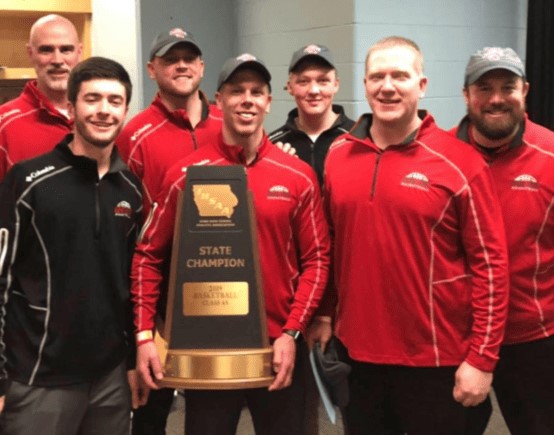
The best coaches do not wait until the season starts to try to make improvements.
They do it in the off-season, with a clear head, and often more time on their hands to make rational decisions.
Again, you do not have to change everything.
But you should always be looking for the next improvement.
One better defensive adjustment.
One better special situation plan.
One better practice structure.
One better player development system.
One better way to use your staff.
That is how programs keep moving forward. Just ask Coach Schultz and his staff!
|
|||||||



 Facebook (145k Followers)
 YouTube (152k Subscribers)
 Twitter (33k Followers)
 Q&A Forum
 Podcasts