

You Don’t Have To Rush The 3-Point Shot
Players sometimes surprise you in the best way possible.
I once coached a player who worked hard, put the time in working on all facets of their game, especially shooting, but… they weren’t very good from the perimeter… to say the least.
During their sophomore year, they shot just 16% from 3. And that was on wide open shots, since that’s the only ones the coaching staff allowed them to take.
They didn’t give up, they just kept grinding away…
…and the next season they shocked everybody.
hey shot 49% from 3 and they were the best deep threat on our team!
Pleasant surprise, definitely.
But I’d be lying if I said I knew exactly why it happened right then.
Maybe it was another offseason of reps.
Maybe it was a small form adjustment.
Maybe they’d gotten stronger.
Maybe they were just more confident.
And maybe it was all of the above. Sometimes it’s tough to pinpoint the exact cause.
Caleb Wilson’s NBA story is similar in many ways.
At North Carolina, the 6-foot-9 forward averaged 19.8 points and 9.4 rebounds while establishing himself as an explosive athlete, relentless competitor, and dangerous scorer around the basket.
But there was one major question surrounding his game:
Could he consistently make shots from the perimeter?
Wilson attempted only 27 three-pointers during his freshman season at North Carolina, making seven of them. That works out to just under 26%.
Then, in his NBA Summer League debut with the Chicago Bulls, Wilson scored 35 points and made seven of his 11 three-point attempts. He made as many three-pointers in that one game as he had during his entire college season.
One Summer League game certainly does not prove that Wilson is suddenly an elite NBA shooter.
But it does offer an important reminder for young players, parents, and coaches:
Shooting development doesn’t happen on the same schedule for everyone.
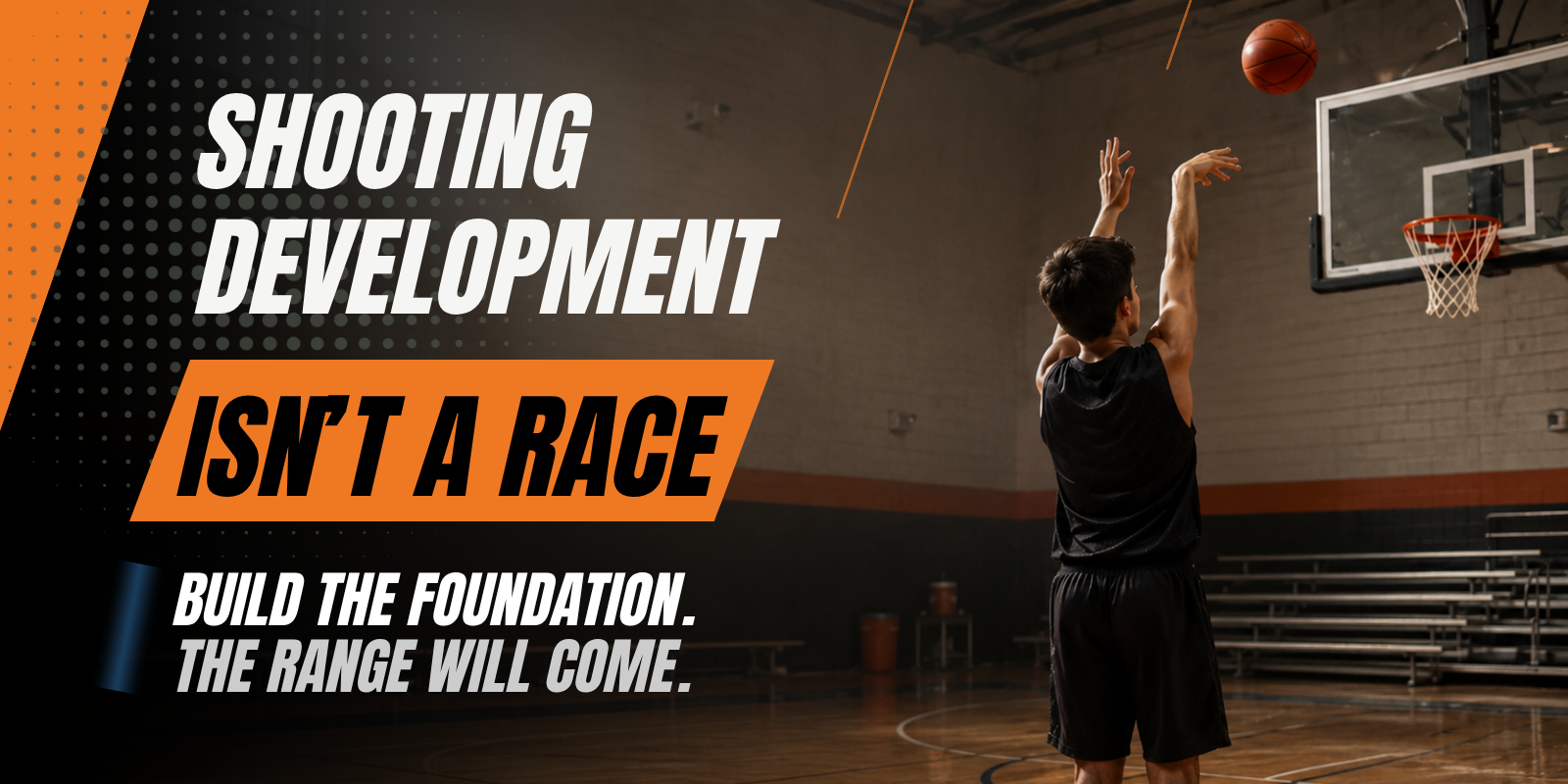
Shooting Development Isn’t A Race
Many young players are in a hurry to become three-point shooters.
They see older players shooting from well behind the line. They watch NBA highlights filled with pull-up threes, step-backs, and deep shots. They want to prove they can do the same thing.
So they begin moving farther away from the basket before they have developed the strength, balance, footwork, and mechanics needed to shoot correctly.
That often creates more problems than progress.
There’s nothing wrong with a young player who isn’t ready to shoot threes yet.
All players develop on their own schedule… not necessarily the schedule they, their parents, or you would prefer.
Your Current Shooting Percentage Isn’t Your Ceiling
Young players often allow their current results to define what they believe they can become.
They miss a few threes and decide they’re shooters.
Parents may become concerned because another player of the same age is already making shots from farther away. Coaches may begin labeling players as “shooters” or “non-shooters” before either player is close to being fully developed.
But shooting is a skill, and skills can improve.
Wilson reportedly said he didn’t dramatically change his mechanics after leaving college. Instead, he increased his repetition and built confidence through the work he was putting in.
That distinction is important.
Players sometimes search for a quick mechanical fix when what they really need is more time developing a repeatable movement.
Of course, mechanics matter. A major flaw shouldn’t simply be repeated thousands of times.
But not every shooting problem requires rebuilding the entire shot. Sometimes players need a manageable adjustment, better practice habits, and enough quality repetitions for the movement to become natural.
Real confidence doesn’t come from telling yourself you’re a great shooter.
It comes from knowing you’ve prepared.
Do Not Confuse Role With Ability
Wilson also explained that shooting threes wasn’t a major part of his role at North Carolina.
Different teams ask players to do different things.
A talented forward may be asked to run the floor, rebound, defend, screen, and score around the basket. A guard may be asked to organize the offense rather than hunt shots. A young player may not be ready to shoot threes in games even though that skill is gradually developing during practice.
Players should continue working on skills that may not currently be featured in their role.
At the same time, they shouldn’t ignore the responsibilities their team needs them to perform right now.
Wilson became an All-American without relying on three-point shooting. He affected games with his athleticism, rebounding, defense, passing, effort, and ability to attack the basket.
That is another valuable lesson for young players:
You do not have to be a great three-point shooter to become a valuable basketball player.
Continue developing the shot, but do not allow one weakness to keep you from contributing in every other area.
Don’t Pigeonhole Your Game
Everyone would love to cross half court and be a threat from three like Caitlin Clark. And there’s nothing wrong with making that a goal.
You should continue working on your shooting range and developing confidence from the perimeter.
But don’t make the mistake of thinking three-point shooting is the only way you can impact a game offensively.
If you aren’t a reliable three-point shooter right now, that doesn’t mean you can’t become an effective scorer.
Look at Jalen Brunson. He can certainly make perimeter shots, but much of what makes him so difficult to guard is his ability to get into the paint, play off two feet, change speeds, use his footwork, create angles, and finish over or around bigger defenders.
He doesn’t rely on only one way to score.
Young players should develop the same mindset.
Maybe your strength right now is attacking the basket. Maybe it’s finishing, cutting, offensive rebounding, posting up smaller defenders, screening, or creating shots for teammates.
Keep improving those parts of your game while you continue developing your perimeter shot.
You never know when your shooting will begin to click. It may happen after you gain strength, improve your footwork, clean up your mechanics, or simply put in enough quality repetitions.
What Coaches and Parents Should Remember
Don’t pressure young players to extend their range before they’re ready.
Instead, help them build the physical strength, movement quality, and shooting foundation that will allow the range to develop naturally.
Praise good mechanics, balance, shot selection, and consistency - not just makes from long distances.
It’s also important to avoid comparing one player’s development with another’s.
Some players gain strength earlier. Some have better coordination at a young age. Others need more time to organize their feet, control their body, and repeat their release.
Development rarely follows a perfectly straight line.
Keep Building the Skill
Caleb Wilson’s Summer League performance doesn’t guarantee that he’ll become a great NBA three-point shooter.
It was one outstanding performance in an exhibition setting.
But the contrast is still remarkable: seven made threes during an entire college season, followed by seven in his first Summer League game.
It’s a reminder that players are not finished products in middle school, high school, college, or even when they enter the professional level.
So, if you’re not a great three-point shooter right now, don’t panic.
Just continue to grind.
And if you’re looking for a place to keep building those skills, a Breakthrough Basketball Fall Camp or Training Academy can give players structured instruction, quality repetitions, and feedback to help them continue improving.
Right now, players who register for a Fall Camp or Training Academy can save 20% and receive the Breakthrough Shooting & Scoring System, our “How to Pick the Best Team for Your Child” Masterclass, and a free Sport Clips haircut.
You can find a Fall Camp or Training Academy near you here:
Find a Camp or Academy Near You
Whether your shot is already starting to click or you’re still building the foundation, don’t rush the process.
Keep working. Keep developing the rest of your game. And be ready when your breakthrough comes.
|
|||


 Facebook (145k Followers)
 YouTube (152k Subscribers)
 Twitter (33k Followers)
 Q&A Forum
 Podcasts