
Turnovers to Touchdowns: 10 Tips to Beat the Press
Pressure can bust pipes... or make diamonds.
No matter the level, there are countless examples of teams that fold under full court pressure.
Think about Houston & Duke in the Final 4. Houston was down 64:55 with 2:15 left. They went on an 11-1 run. Much of it was fueled by the fact that Duke couldn’t get the ball inbounds against the Cougars' pressure.
There’s nothing more frustrating than watching your team fall apart under full-court pressure. The pace speeds up, players panic, and turnovers pile up. Whether it’s a 2-2-1, a run-and-jump, or full-blown chaos, press defenses can completely disrupt your game plan—unless your team is prepared.
In this article, we’ll walk through 10 practical tips to help you break presses more effectively, reduce turnovers, and keep your team calm and in control. These ideas are simple to teach, easy to rep in practice, and proven to work at every level.
Check out the video below for a couple of specific press breaks, and read on to learn the tips. If you’ve struggled with pressure in the past, or you just want to sharpen your team’s poise under fire, this is the place to start.
10 Press Break Strategies Every Coach Should Know
-
Form an “umbrella”
Once the ball is inbounded, the next three players should form an umbrella. To do so, fill these three spots:
-
Reversal
-
Middle
-
Sideline
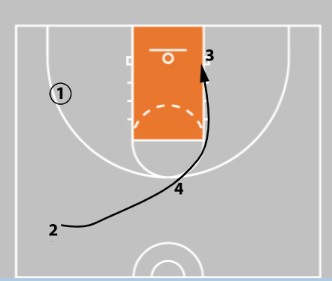
That gives your passer three good options depending on how the press is aligned.
-
-
Inbound to the weak side.
This is effective because it makes the zone shift. The first pass changes ball side & weak side, putting the defense into immediate rotation.
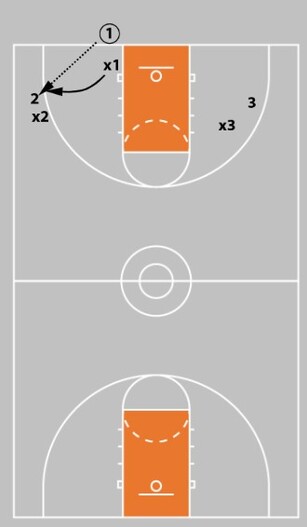
It’s especially effective against teams that trap the first pass. Inbounding weak side forces the trapper to cover more ground, giving the receiver more time to make their decision.
-
Pass opposite of where you got it.
This goes back to keeping the defense in rotation. If you catch the ball from one side, immediately look to reverse it. Presses tend to load up on the ball side.
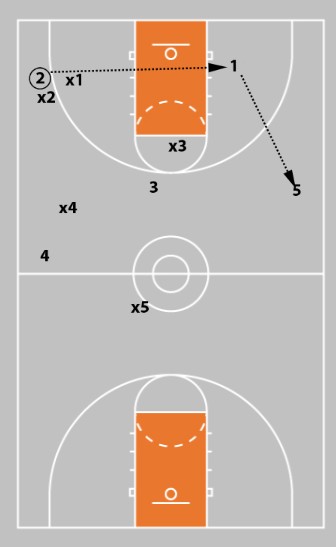
That means quick reversals can beat the press and force long closeouts.
-
Stay out of trapping areas.
Where do presses generally trap? The corners of the court and just across the half court line.
Why do they trap there? Because it’s almost like having four defenders - the two trappers, the sideline, and the baseline/half court line.
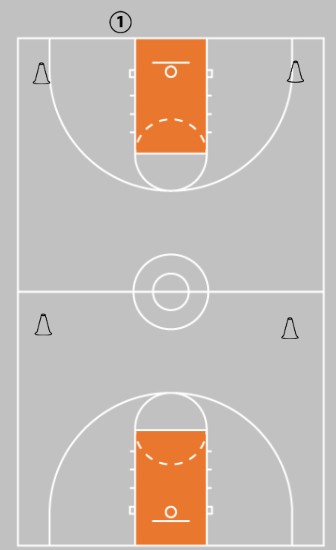
Knowing that, teach your players to avoid holding or picking up the ball in those areas
-
Keep a player deep
Some coaches like to bring all five players into their press break. The thinking is that it provides more passing options.
I’d suggest keeping someone deep. Why? Because it forces the defense to defend more space. The more space they have to defend, the longer the rotations become. That opens up more opportunities for your offense.
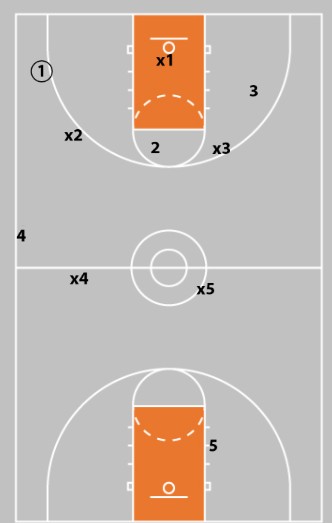
Also, you might get 2-3 easy layups over the top.
-
Don’t be 3 in a row
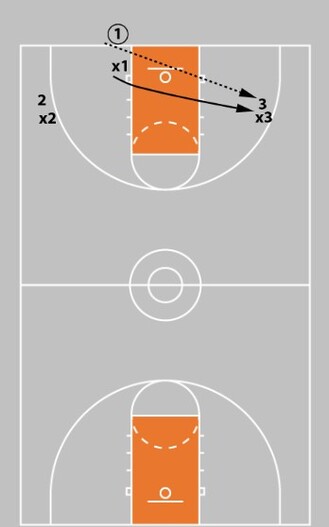
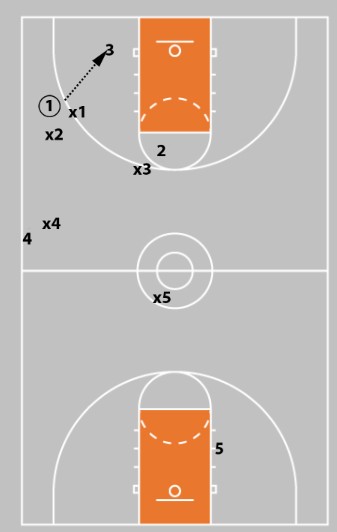
Presses thrive on making passing hard. When your players stand 3 in a row, they make the game harder on themselves.
By 3 in a row, I mean that the potential receiver is in line with the defender, preventing a straight line pass.
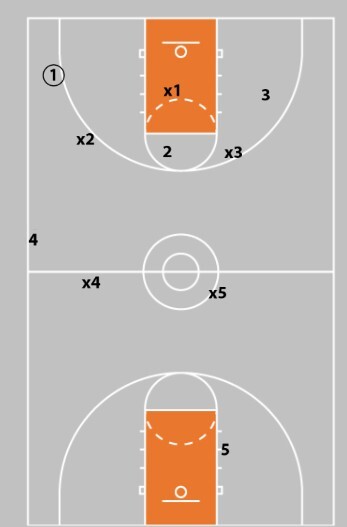
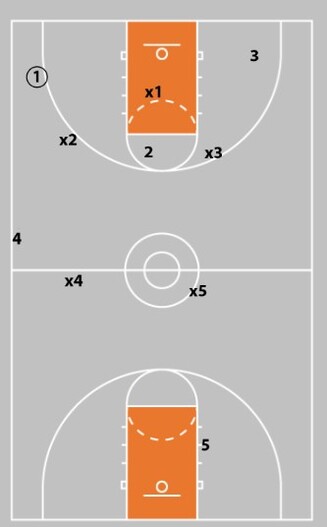
In the picture on the left, it’s hard for 1 to pass to 3, since x1 is directly between them.
In the picture on the right, 3 solves this problem by moving to an area where they are not 3 in a row. That makes the pass much easier.
-
Keep a player behind the ball when trapped.
Many players panic when being trapped. Good traps take away vision up and across the court.
But most traps don’t account for passes backwards. While backwards passes are not ideal, they might be your best option when trapped.
By moving behind the ball, 3 is in a better position to receive a pass from 1.
-
Engage two defenders with the dribble.
Smart players use their dribble to manipulate a press. They don’t dribble into trap areas. Instead, they dribble TOWARDS trap areas. That starts the defensive rotation, opening up passing lanes.
Teach your players to know and anticipate the rotations. That allows them to know which passes will be open as defenders start to move.
If they can’t make the anticipated pass, they should use a pull back dribble to create space and avoid the trap.
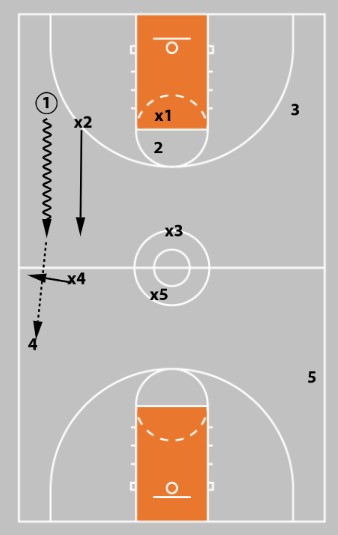
Against 2-2-1, 1 might dribble up the sideline. This draws x4’s attention. Before 1 gets to the trapping area at half court, they look to pass ahead to 4.
-
Don’t let them set their press.
Press breaks are great. But what’s better is not being pressed. When I pressed, the hardest teams to play against were the teams that got the ball out the quickest.
If you can inbound the ball immediately, you can put the press on its heels.
-
Don’t YOU set it up
This is the corollary to #9. Your mentality should be, “they press, they pay!” If you break the pressure and then pull the ball out to “set it up,” you give the defense a chance to reset.
Don’t give them that second chance. Press offense often results in advantageous situations (4v3, 3v2, etc.). Use that advantage to your advantage! Teach your players to attack and score in those situations.
Stop the Chaos: Use These Smart Tips to Break Presses
There are countless press breakers out there. While it’s important to have a press break, it’s more important to understand HOW to break presses.
If you teach your team the 10 tips above, you’ll be in great shape to tackle any press you see.
|
|||


 Facebook (145k Followers)
 YouTube (152k Subscribers)
 Twitter (33k Followers)
 Q&A Forum
 Podcasts