

One Reason Players Get Worse In The Off Season
Every off season kids do workouts and every off season…
Some players get better
Some players stay the same
And
Some players get worse.
It’s a fact.
It is obviously the number one time for kids to improve their skills, so why does it go haywire for so many players?
One of the most common reasons is kids are doing the wrong level of workouts for their skill set!
The Right Workout For The Right Player
Not every player should be doing the same shooting workout.
A beginner or foundational player should not train the same way as an advanced high school player.
And an advanced player needs drills that challenge them and keep their trajectory going up.
The right workout depends on where a player is right now. It does not depend on:
What their teammates are doing
What their friends are doing
What they just saw posted on Instagram
It depends on their current skill level and what they need to advance their skills.
That is why players, parents, and coaches need to ask an important question before every offseason workout:
Does this workout fit the player’s current skill level?
If the answer is no, the workout may not help as much as you think or may be making your player worse.
A good workout should challenge a player, but it should not be so difficult that the player is constantly off balance, changing their form, rushing their release, or missing almost every shot.
Is This Drill A Good Fit For You?
One of the easiest ways to tell if a drill is right for a player is to track the quality of the reps and the shooting percentage.
In many offseason shooting workouts, players should be able to make roughly 50% to 60% of their shots on controlled practice reps.
That does not mean every drill has to be easy.
And it does not mean players should never do difficult shots.
But if a player is consistently making only 20% to 30% in a drill, that is usually a warning sign.
It may mean:
The shot is too deep
-
The footwork is too advanced
The movement is too difficult
-
The player is not strong enough for that range yet
The drill does not match the player’s current skill level
-
The player is practicing bad habits instead of building good ones
For example, if a younger player is taking off-the-dribble threes and only making 2 or 3 out of 10, while fading, leaning, or changing their shot form, that is not a great offseason drill…at least at this time.
That player would probably improve faster by moving closer, cleaning up their footwork, building balance, and working on shots they can repeat with good mechanics.
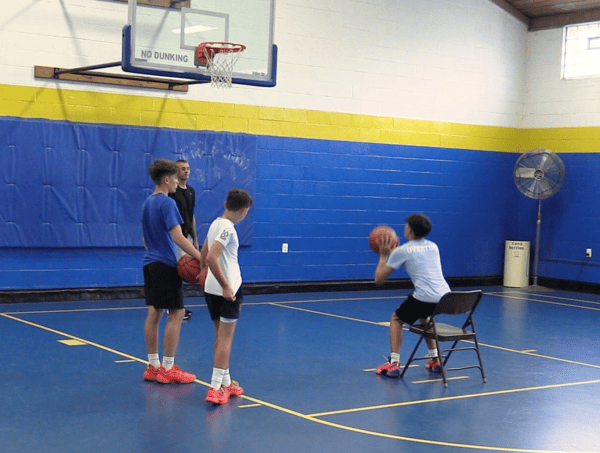
When A Drill Is Too Advanced
A lot of players see advanced shooting drills online and want to copy them.
They see players coming off screens, shooting off dribble handoffs, taking step-backs, relocating, shooting on the move, or working through long game-speed sequences.
Those can be great skills.
But only if the player is ready for them.
If a player does not have the foundation yet, advanced drills can create bad habits.
They may shoot off balance.
They may use poor footwork.
They may change their form just to get the ball to the rim.
They may not have the ball handling skills to do the off the dribble shooting drills.
Here is a simple rule:
If the drill causes the player’s form, balance, or footwork to break down, the drill is probably too advanced right now.
That does not mean the player should never do that drill.
It just means they may need to earn their way there.
Foundational Players Need Foundational Work
For younger players, beginners, or players still developing basic shooting habits, the offseason should be about building a strong base.
That means working on:
Shooting form including: catching low, good footwork and balance
Shot preparation (preparing early to get quickly into your shot)
Simple one-dribble shots
Basic movement into shots (back peddles, forward movement, lateral movement)
Finishing with control
Confidence through repetition
These players do not need the most advanced workout they can find, they need quality reps that help build up their foundation for the future.
A foundational player should spend more time on shots like:
Form shooting close to the basket
-
Short shots (it’s ok to have your entire workout be from 12’ or closer)
Catch-and-shoot reps from comfortable range
-
One-dribble pull-ups from midrange
Shots after simple footwork such as: backpeddling with a catch and shoot or a quick slide followed by a catch and shoot
-
Shots after a basic cut
Layups and finishes off two feet
-
Simple pivots, shot fakes, and step-throughs
Basic ball handling into a balanced shot
A player who is still learning how to shoot with balance should not spend the whole workout taking difficult off-the-dribble threes.
A player who struggles to get their feet ready should not be rushed into complex game-speed sequences.
A player who cannot consistently make shots from midrange should not be forced to shoot deep threes with poor form.
The goal is not to look advanced.
The goal is to build habits that will hold up later.
A Better Plan For Beginner/Foundational Players
A good foundational shooting workout might look something like this:
1. Close-range form shooting
Start near the basket and focus on balance, hand position, follow-through, and clean mechanics.
2. Footwork into catch-and-shoot reps
Work on getting the feet ready before the catch and shooting with rhythm.
3. One-dribble pull-ups
Attack with one controlled dribble, stop on balance, and shoot without drifting.
4. Simple movement shots
Add basic cuts, slides, or step-ins, but keep the shot within a range where the player can maintain good form.
5. Finishing work
Include layups, two-foot finishes, pivots, and simple finishes around the basket.
For a foundational player, this type of workout may be much more valuable than taking 100 difficult shots they are not ready to make.
Advanced Players Need To Be Challenged
The opposite problem can also occur.
Some players have already built a strong foundation, but they keep doing the same basic workouts over and over.
This will not make an Advanced Player worse… but it definitely will limit their growth and development as a player!
If a player already has solid mechanics, good balance, strong footwork, and confidence shooting the ball, they need to be challenged.
They still need to keep their foundation sharp, but they also need to add more game-speed shooting and advanced progressions.
That may include:
Shooting on the move
-
Relocating after passes
Coming off screens
-
Shooting off dribble handoffs
Attacking closeouts and having to make decisions off the closeout
-
Using ball screens
Taking one-dribble and two-dribble pull-ups
-
Shooting while tired
Connecting multiple actions together
Advanced players need workouts that look more like the shots they will actually get in games.
They need longer, tougher workouts.
They need movement.
They need pressure.
They need to learn how to stay balanced and repeat their mechanics when the game speeds up.
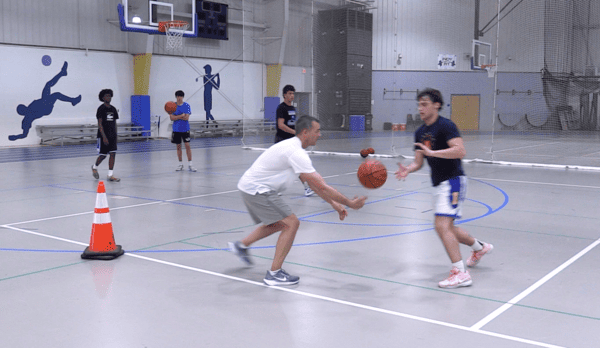
What An Advanced Workout Might Look Like
For an advanced player, the workout should include more game-like actions.
Examples include:
1. Movement catch-and-shoot reps
Sprint into shots, relocate to the corner, lift from the corner to the wing, or slide into open space.
2. DHO shooting
Come off a dribble handoff, square the feet, and shoot with balance.
3. Ball screen reads
Work on pull-ups, attacks downhill, reject moves, and shots after changing pace.
4. Closeout attacks
Catch ready, shot fake or rip through, take one or two dribbles, then finish or shoot under control.
5. Screen actions
Come off curls, flares, pin-downs, or re-screens and get into a shot quickly.
6. Fatigue shooting
Add conditioning so the player has to shoot when tired, but still maintain mechanics.
7. Multi-action reps
Connect two or three actions in one rep, such as relocate, catch, attack a closeout, step back, and shoot.
This does not mean advanced players should ignore stationary shooting.
They still need form work and basic catch-and-shoot reps.
But if that is all they do, they may not be fully prepared for the shots they will get in games.
Know Thyself!
One of the most important things a player can do this offseason is honestly evaluate where they are.
Don’t sugar coat things, and seek feedback from others.
Players should ask themselves these questions before starting a workout program.
Can you shoot with the same form throughout a drill or workout?
-
Are you making workout shots at a solid percentage such as 50% or above?
Do you feel balanced when moving into a shot?
-
Can you shoot without drifting or fading?
Do you catch the ball and go straight up and into your shot? Or do you catch and then slowly prep to shoot the ball?
-
Can you shoot from their chosen range without changing their mechanics?
Can you repeat the same shot under mild fatigue?
If the answer to many of those questions is no, the player may need more foundational work.
If the answer is yes, the player may be ready for more advanced progressions.
Parents: What Should You Look For?
Parents do not need to be shooting experts to help their player.
But they can watch for a few simple things.
During a workout, ask:
Is my player balanced?
Are they using the same shooting form?
Are they getting their feet ready?
Are they taking shots from a realistic range?
Are they making enough shots to build confidence?
Are they missing because the drill is challenging, or because the drill is too hard?
Are they practicing shots they might actually take in games?
If your player is missing more shots than they are making, getting frustrated, and their form is falling apart, that workout may not be helping.
A better option may be to simplify the drill, move closer to the basket, slow the pace, or focus on footwork first.
The Bottom Line
Players do not just need more shots.
They need shots and workouts that fit their current skill level and help them progress step by step.
Foundational players need to build the habits first.
Advanced players need to keep building while adding more game-speed movement and tougher progressions.
When players train at the right level, they build confidence, improve faster, and develop skills that actually transfer to games.
But when they train at the wrong level, they can spend the whole offseason working hard without getting the results they want.
So before your next workout, ask this:
Is this workout helping me build the next step in my game?
If it is, keep going.
If it is not, adjust.
That one decision could make a big difference in how much you improve this offseason.
Pro Workout Tip From Trainer Bob Patton
Check out advice from Pro Trainer Bob Patton who has trained thousands of players from Youth through the NBA!
Want a ready made plan with Foundational and Advanced Workouts? Check out one of our most popular shooting and scoring workout bundles ever!
|
|||


 Facebook (145k Followers)
 YouTube (152k Subscribers)
 Twitter (33k Followers)
 Q&A Forum
 Podcasts