

How can I tell if a basketball camp coach is qualified?
Look for a basketball camp coach who can teach players at your child’s age and skill level, give specific feedback, and keep players engaged. Before you register, ask who will actually coach your child, how the staff prepares, and how the camp handles supervision and safety. Playing experience can be useful background, but it doesn’t establish teaching ability.
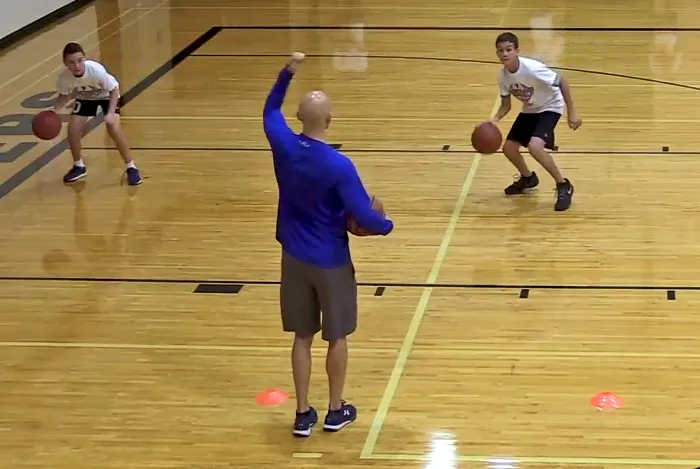
Some of the most impressive coaches I’ve encountered show you who they are before the first drill. They arrive early, have name tags ready, and greet kids at check-in. They make a nervous player smile. Some learn everyone’s name by the end of day one; others have them down by days two or three.
That matters to me. But I also want to see what happens once a player needs help. Can the coach explain a correction, watch the next attempt, and adjust? That’s where you learn much more than a résumé can tell you.
What playing credentials can and cannot tell you
I’ve worked with camp coaches who played professionally for 15 or 20 years, and others who played at high-level Division I schools. Sometimes they receive lower camp evaluation scores than coaches whose playing careers ended in high school or at a smaller college.
Those evaluations don’t measure everything about a coach, and they don’t prove how much a player improved. What they’ve shown me is that a big playing résumé doesn’t automatically produce a better camp experience.
The coaches who stand out understand basketball and know how to study and teach a curriculum. They also want to be there. They connect with the kids, enjoy teaching, and care whether players get better.
When you read a coach’s bio, look for experience teaching children like yours. Then ask what that coach will actually do at camp. A well-known name may belong to the person leading instruction, developing the curriculum, or making a brief appearance. Those are different roles.
What to watch during 10 minutes of instruction
If the camp allows parents to observe, watch how the coach responds to players. You don’t need to be a basketball expert to notice these things:
- Players get plenty of repetitions. They spend time practicing rather than waiting in long lines.
- The coach gives specific feedback. You hear more than “Good job” or “Keep going.”
- The coach watches what happens next. After a correction, the player gets another attempt and the coach checks it.
- Players receive encouragement and an appropriate challenge. They can make mistakes without being embarrassed.
- The coach connects with the group and individual players. Kids receive attention even in a larger camp.
For example, imagine a player struggling with shooting form. A strong coach might briefly pull that player aside, identify one thing to work on, demonstrate it, and let the player try again. A cue could be to focus on keeping the shooting elbow underneath the ball.
Then the coach watches a few repetitions, encourages the player, and makes another adjustment if needed. The point is the teaching process: one manageable correction, another attempt, and follow-up. Giving five corrections at once can overwhelm a player.
Ten minutes gives you a useful glimpse. It won’t establish everything about the coach’s knowledge or the camp’s supervision. Combine what you observe with the questions below.
Make sure the coach fits your child
A coach who works well with varsity players may not be the right fit for a third grader learning the game. Ask about experience with your child’s age and ability, rather than accepting “all skill levels” as the full answer.
| Your player | What instruction should emphasize |
|---|---|
| Younger beginner | Simple explanations, positive feedback, and fundamental skills. The coach helps the child understand the task and feel comfortable trying. |
| Experienced high school player | More detailed instruction and challenge, including game speed, decision-making, reading defenders, and applying skills under pressure. |
Ask how the camp groups players and adjusts difficulty. A beginner and an experienced player shouldn’t automatically receive the same instruction or challenges just because they’re in the same gym.
As you compare options, you can find a Breakthrough Basketball camp near you. Use your child’s age, experience, and goals to narrow the choices, then ask about the coaching and grouping at that specific camp.
Three questions to ask before paying
A quality camp should be comfortable explaining who teaches, how coaches prepare, and what your child can expect. Here are the questions I’d start with. The sample answers illustrate the level of detail to look for; they aren’t promises about a particular camp.
1. Who will actually teach my child?
Ask for the lead coach’s name, their experience with your child’s age group, and their role throughout camp. If a famous player appears in the advertising, confirm how much time that person will spend teaching. Ask when the camp will finalize coach assignments, since staffing can change.
A useful answer names the coach and explains their on-court responsibilities. “We have experienced coaches” leaves you without enough information to judge fit.
2. How do you train and evaluate your coaches?
Ask what training coaches complete, whether they follow a structured curriculum, and how the organization reviews their performance. Look for an explanation of teaching expectations and how the camp uses parent feedback or evaluations to improve.
“Our coaches played at a high level” doesn’t answer the training question. Recent reviews can help you look for recurring comments about instruction, attention, and communication. They’re one source of information, rather than proof on their own.
3. How will my child receive feedback and appropriate challenges?
Ask about the expected coach-to-player ratio, how the camp groups players, and what a typical day looks like. Have the organizer explain how coaches give individual feedback and adjust drills when players need more help or a greater challenge.
“We work with all skill levels” is a starting point. You still need to understand how that works. Ask how the staffing and drill format will allow coaches to notice and help your child.
Ask about assistants and safety procedures
Assistant coaches matter because they often provide instruction and feedback at individual baskets. In our experience, assistants work best when the lead coach demonstrates a drill in a show-and-go format, explains expectations, and then moves around the gym to check each group.
Ask who supervises assistants and who stays responsible for players throughout the day. A strong lead coach should know what is happening beyond the group directly in front of them.
Also ask the organizer:
- Which staff members receive background checks, and how often? Ask separately about lead coaches and assistants, and about day camps versus overnight camps.
- Who supervises players during breaks and transitions?
- What is the plan for injuries, emergencies, and behavioral concerns, and who is responsible for carrying it out?
A famous coach’s name doesn’t answer those questions. Get the details for the camp you’re considering. A background check also doesn’t tell you whether someone can teach; you need to evaluate both staff screening and coaching ability.
Recognize the difference between challenge and humiliation
Good coaches can set high expectations and push players outside their comfort zones. They should also help kids feel comfortable making mistakes. A player trying a harder dribbling drill may lose the ball. That can be part of learning.
When a player repeatedly struggles, a constructive coach can demonstrate again, slow the drill down, and build the speed back up as the player gets comfortable. The player gets a clear next step.
A coach who responds by embarrassing the player in front of the group can make that child afraid to try. Watch whether corrections help the player understand what to do next, or simply express the coach’s frustration.
Take bullying, inappropriate language, unsafe drills, favoritism, and ignored injuries seriously. Also pay attention when players spend much of the session waiting or playing without instruction. Those behaviors deserve a conversation with the camp director; a coach’s résumé doesn’t excuse them.
A quick checklist for comparing camps
Before you register, make sure you can answer these questions:
- Who will teach my child, and when will staffing be confirmed?
- What experience does that coach have with players at this age and level?
- How do coaches prepare, give feedback, and adjust the challenge?
- How do grouping, staffing, and drills make individual attention possible?
- Who supervises assistants and players, and what screening and emergency procedures apply?
Then consider what your child wants from camp. If the goal is skill development, I’d put teaching experience, feedback, and the actual coaching staff ahead of name recognition. If your child idolizes a former player and wants to meet them, that experience can have value too. Just confirm what the camp includes.
If neither camp can explain what you’re paying for, keep looking. You should be able to make this decision with more than a famous name and a list of playing accomplishments.


 Facebook (145k Followers)
 YouTube (152k Subscribers)
 Twitter (33k Followers)
 Q&A Forum
 Podcasts