

How Forcing the Chase Creates a Screening Advantage
Often It’s Small Details That Make Actions Successful
Great coaches get specific.
They know small details can be the difference between winning and losing close games.
Screening is a perfect example.
“Go set a screen” might get a player to the right spot. But does that screen actually change what the defender has to do?
That’s a detail Coach Nate Steege emphasizes when teaching his Zoom Offense.
The goal is to force the chase: use the screening angle to make the defender trail the action instead of slipping underneath and meeting the offensive player on the other side.
Coach Steege intentionally has his players set the screen low, so the defender will follow and “chase” the person they are guarding over the screen.
A Small Adjustment That Changes the Read
A screen set too high, or at an angle that leaves an easy route underneath, can allow the defender to stay in front. The offense completes the action but gains little separation.
Coach Steege emphasizes a lower angle, working toward the defender’s back pocket. That positioning makes the shortcut underneath more difficult and encourages the defender to chase.
When the Screen Is Set Too High
This first example shows a screen set high that does not force a chase.
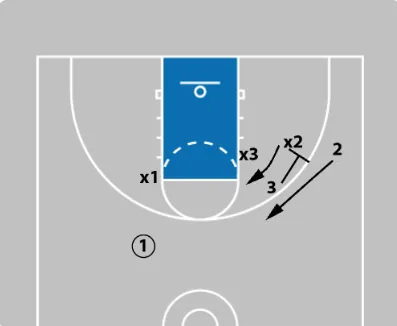
Diagram 1
Notice how 3 is setting the screen on the high side of x2. X2’s easiest path is going under the screen and beating 2 to the spot.
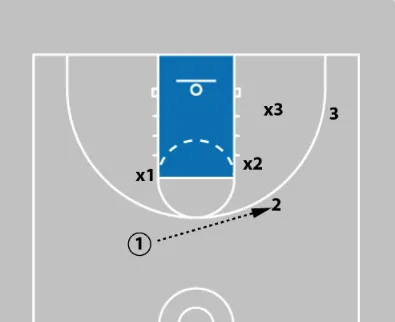
Diagram 2
While 2 may be open to receive a pass in this situation, x2 is likely in their path, negating any action toward the basket.
Screening to Force the Chase
Now notice the subtle difference in the screen set by 3 on x2.
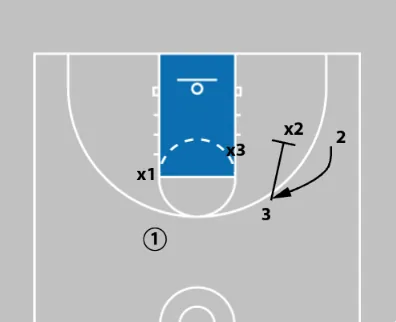
Diagram 3
The screen is lower and forces x2 to chase 2 as they go over the top of the screen. If x2 chooses to go under the screen, there would be an especially large gap for 2 to catch and shoot as x2 tries to recover.
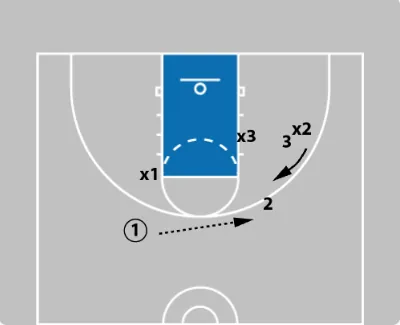
Diagram 4
When 2 does catch the ball, they have an advantage with x2 trailing the play. They may also force the switch, which could allow 3 to seal x2 and roll to the basket.
Watch Coach Steege explain why they love to force the chase in his Zoom Offense.
Three Advantages This Can Create
- A temporary numbers advantage. When the primary defender trails, the next defender may have to account for both the ball and the screener. That can create a brief 2-on-1 opportunity before the trailing defender recovers.
- More shooting space if the defender goes underneath. A defender who takes the longer route underneath may concede more separation. For a player within shooting range, that can become an opportunity to stop, get balanced, and shoot.
- Help rotations that open opportunities for teammates. Getting downhill with a defender behind the play can draw help. Now the offense can look for the roller or a pass to an open teammate as the defense rotates.
Set the Angle to Create the Advantage
If you want to create a numbers advantage as your player catches off the screen, consider teaching a screening angle that forces the defender to chase. Getting that defender behind the play gives the receiver a chance to attack before the defense recovers, potentially forcing the next defender to guard two offensive players.
That’s why it’s worth teaching more than where to set the screen. Teach players how to angle it to create the advantage you want, then recognize and use the opportunity it opens up.
And remember, the devil is in the details. If you want players to really set the screen to force the chase, it is something that you’ll have to consistently remind them to do.
The screen’s location matters. Its angle can determine whether the action creates an advantage.
This clip comes from The Zoom Offense with Nate Steege.
Good luck!
Mark Brase


 Facebook (145k Followers)
 YouTube (152k Subscribers)
 Twitter (33k Followers)
 Q&A Forum
 Podcasts