

The Closeout Detail That Could Make Your Defense Better
I came across a pretty fascinating breakdown recently from Mike Jagacki of Lockdown Defense.
It revealed one small detail that could make a big difference in how well your team defends.
It could be the difference between a good closeout and a great one.
Mike went back and watched all 366 three-point attempts from the NBA Finals looking for one thing:
What actually affects a shooter on a closeout?
Eventually, he narrowed it down to 154 catch-and-shoot threes where the defender was actually in position to affect the shot.
Then he separated them into two groups.
Early Hand vs. Late Hand Closeouts
Early Hand Closeouts
The defender's hand was already up before the shooter started the shooting motion.
12-for-52 shooting
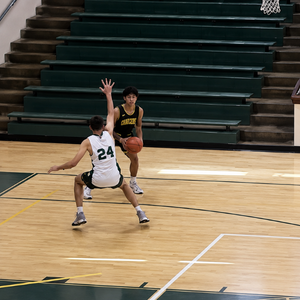
Late Hand Closeouts
The defender didn't get a hand up until after the shooter had already started the shooting motion.
49-for-102 shooting
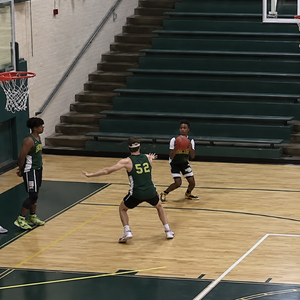
That's more than double the shooting percentage.
Now, this wasn't a controlled scientific study.
There are obviously other variables involved, and 154 shots isn't a huge sample.
So I'm certainly not saying:
"Get your hand up early and you'll magically cut your opponent's shooting percentage in half."
But I still think there's a really important coaching lesson here.
The Timing of the Contest Matters
Think about what most shooters have been taught their entire lives:
Hand down = shoot.
Hand up = drive.
If the defender's hand doesn't appear until the shooter has already caught the ball, decided to shoot, and started their motion...
How much did that contest really affect the shot?
Compare that to a defender whose hand is already there when the ball arrives.
Now the shooter sees the contest before making the decision to shoot.
That's a completely different situation.
An Early Hand May Make the Rest of the Closeout Easier
There's another benefit to getting the hand up early.
When players sprint toward a shooter and throw their hand up at the very end, their momentum tends to move forward and upward.
That's happening at the exact moment they need to prepare for the drive.
Get the hand up earlier, and those final steps can be used to decelerate, get under control, and prepare to move laterally.
Mike uses a cue I really like:
"Play the shot. Think the drive."
You're using the hand to discourage or affect the shot while preparing your body for the drive that's coming next.
Why This Small Detail Matters So Much
Great closeouts make virtually any defense better.
- Man-to-man
- Zone
- Pack line
- Pressure defense
It doesn't really matter what system you're using.
If your players consistently arrive earlier, show a hand sooner, and stay under control, they're going to make more shots difficult.
They're also going to give up fewer straight-line drives.
Good closeouts can make your entire defense better without changing a single thing about your system.
Sometimes we spend so much time looking for a new defense...
A new coverage.
A new press.
A new strategy.
When one tiny detail executed better might make the defense we already run considerably better.
That's why I found Mike's numbers so interesting.
23% vs. 48%.
I wouldn't take those numbers as gospel.
But I absolutely think they're enough to make me pay much closer attention to when our players get their hand up on a closeout.
A Simple Coaching Cue to Try
The next time you're working on closeouts, don't just watch whether your players get a hand up.
Watch when the hand gets up.
Can they show the contest early enough that the shooter sees it before making the decision to shoot?
Then can they use their final steps to get under control and prepare for the drive?
It's a small adjustment.
But sometimes the small details are exactly what make a defense much harder to play against.
Looking for More Ways to Improve Your Defense?
For a limited time, we're featuring a rotating lineup of defensive coaching systems at special Rapid-Fire Sale prices.
Each offer tackles defense from a different angle, including man-to-man fundamentals, pressure, trapping, matchup concepts, and keeping the ball out of the middle.
See What's On Sale Today →Rapid-Fire offers change throughout the sale, so check back for the latest defensive deals.
Want to stay in the loop? Join our email list for future sales, new articles, and coaching resources.
What do you think? Let us know by leaving your comments, suggestions, and questions...
|
|||


 Facebook (145k Followers)
 YouTube (152k Subscribers)
 Twitter (33k Followers)
 Q&A Forum
 Podcasts