

Win the Game Before It Starts: A Player's Guide to Mental Preparation
Kobe Bryant was famous for many things — his footwork, his competitiveness, the championships. But the deeper you look, the more you realize something else separated him from everyone else: his mental routine.
Long before tip-off, Kobe had already “played” the game in his mind. He was known to arrive hours before anyone else, sit alone on the bench or in the locker room, and walk through every scenario he expected to face.
He visualized defenders, screens, double-teams, late-game pressure, and even the emotions he wanted to feel in the moment. His warmup wasn’t just physical — it was a mental rehearsal.
One of his former trainers recalled how Kobe would close his eyes and run through exact sequences: catch, pivot, shot; jab, dribble, pull-up; pressure, counter, finish. By the time the real possession happened in the game, it felt familiar. That’s why Kobe looked so composed in big moments: he had already been there.
In addition to his mental preparation, Kobe was religious about his physical preparation. He would go through the same 20-30 minute shooting routine before every game. That part of the routine created comfort and confidence.
The final step of his “Mamba Mindset” was listening to the theme song from the horror movie, Halloween. That locked him into the mentality he wanted to take onto the court.
Kobe’s success wasn’t just about talent or hard work. It was about preparing his mind with the same intention he used to prepare his body.
And that’s what I want to help you build today — a simple but powerful routine that trains your mind to perform with confidence, clarity, and control.
3 Reasons Why Mental Routines Matter (Even More Than You Think)
-
Mental preparation can separate players when physical skills are similar. Good shooting form, footwork, and conditioning are essential — but at higher levels, a lot of players have those.
What really divides players: composure under pressure, consistency, and mental clarity. Sports psychology research shows that mental training — visualization, self-talk, preshot routines — can improve performance under pressure.
-
Routines reduce chaos, build focus. When you step onto the court with a set mental pattern, you eliminate the “noise” — doubts, nerves, distractions. You prime yourself for focus, confidence, and execution. You are taking control of your prep rather than leaving it to chance.
-
Routines create consistency: Whether you’re shooting free throws in warmups or pulling up from the arc in the final seconds, your mind stays steady. Consistency is often what wins or loses games. Confidence rises when we can predict situations. Routines help create that predictability.
5 Steps to Build a Simple Mental Pre-Game Routine
Here’s a step-by-step mental prep plan you can build into your normal game-day warmup. Try this over a few weeks. Reflect on what works best for you and tweak as needed
1. Arrive Early & Breathe (5 minutes)
-
Give yourself extra time before warmups. Rushing creates anxiety, immediately undermining your prep. As soon as you step into the gym, take 3-5 deep belly breaths.
Focus on your breathing, let tension leave your body.
2. Visualize (3–5 minutes)
-
With eyes closed (or head down), visualize yourself playing your role: making the first pass, hitting shots, communicating on defense, rebounding, and making the right reads under pressure.
Imagine sounds, scoreboard, crowd noise, fatigue — but also calm confidence and composure. The more realistic the visualization, the better.
3. Positive Cue / Self-Talk (30 seconds)
-
Pick a short phrase or “anchor cue” — e.g., “Trust the work,” “See it, take it,” “Stay loose.”
Say it quietly to yourself. Use it as a mental trigger: this cue = focus. Coaches and sport-psych professionals use such anchors all the time. Come back to it as needed throughout the game.
4. Physical Warmup + Combine with Mental Cues (5–10 minutes)
-
Do your normal ball-handling / shooting warmup, but rhythmically — combine dribbles or shot attempts with your mental cue or a deep breath before each rep.
This connects the physical and mental — builds the “muscle memory” of calm and focus under movement.
5. Game-On Reset (Before tip-off)
Just before the game/tip-off, take a final deep breath & repeat your cue silently. Let go of outside noise, pressure, and expectations — bring your focus to the present moment.
What You Should Practice — Don’t Wait for Game Day
Treat your mental routine like a skill. Practice it. Here’s how:
-
Daily or weekly visualization sessions, even on off-season or non-game days. 5 min/day helps build mental strength over time. Like anything, your visualization ability will improve with practice. Visualization before falling asleep can be very effective.
-
Combine with normal practice: After your regular drills, close your eyes and run through your mental scenario, then shoot free throws or game shots immediately after. Build that “mental calm → physical execution” connection. Doing this in practice helps build the habit for games.
-
Journal after games/practices: Write how you felt — nervous, calm, pumped, distracted — so you can track patterns and see when the routine works (or needs tweaking).
Want To Level Up Physically AND Mentally?
At Breakthrough Basketball Camps, the work isn’t just on your jump shot or your handles. From the very beginning, our camps have stressed that what happens between the ears matters just as much as what you do with the ball.
Our coaches don’t just dial up shooting drills and lay-ups all day — they teach players to build confidence, resilience, and mental toughness.That attention to mindset is part of why so many players walk away not only more skilled, but also mentally sharper and more consistent.
In other words: Breakthrough camps don’t just help you improve on-court technique — they help you develop the kind of mental game that wins close games, thrives under pressure, and lets you stay locked in when the crowd gets loud, and the clock is ticking. Learn more below and find camps near you!
Conclusion
If you’re serious about basketball — not just playing, but getting better — it’s not enough to train your body. You must train your mind. The physical drills will always matter. But if your head isn’t right, the legs, the skills, the talent — won’t be enough when it counts.
Use the tips above. Build your mental routine. Practice it. Trust the process. And next time you step to the free throw line with the game on the line, your mind will be as ready as your body.
If you coach others, start teaching this: mental routines help players stay calm under pressure, make better decisions, and perform with confidence.
Play smart. Play confidently. Play with composure.
Gain the Edge to
Stand Out on the Court
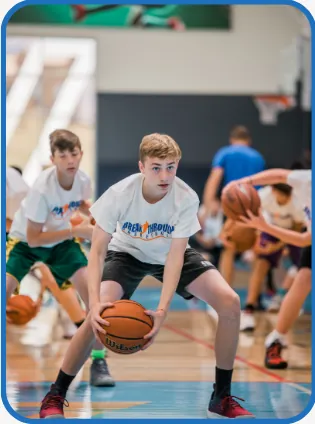
Breakthrough Basketball Camps help players improve their skills and decision-making while building the confidence to shine on and off the court. Trusted by over 150,000 players nationwide, our camps provide:
-
Experienced coaches who know how to teach every level
-
Skill development in shooting, ball handling, and all-around play
-
Game-like situations that build confidence under pressure
-
A positive, motivating environment parents can feel good about
-
Beginner, Youth, and Advanced Camps - Ages 6 to 18
|
|||


 Facebook (145k Followers)
 YouTube (152k Subscribers)
 Twitter (33k Followers)
 Q&A Forum
 Podcasts