
The Coach's Guide to Smart Timeouts: 7 Dos and 1 Don't
“They need a TO, baby!” Most of you will recognize that as one of Dick Vitale’s famous catchphrases.
Vitale, who coached in both college and the pros, would often make that statement when the opposing team was going on a run.
Time out management is a skill. Depending on the level you coach at, you generally get between three and five. Thus, they must be used appropriately.
Let’s take a look at some situations in which a timeout is warranted - and one where it’s not!
How Do You View Timeouts?
There is no one best philosophy when it comes to timeouts. For example, legendary coach Dean Smith was famous for saving his timeouts until the end of the game. He felt that timeouts were most valuable in the endgame, and he coached accordingly.
Spurs coach Greg Popovich famously used a timeout :16 into a game! He uses his timeouts much more liberally than Smith did.
Hall of Fame coach Phil Jackson was known for not calling timeouts during an opponent’s run. He believed his players needed to learn how to steady themselves without the benefit of a timeout.
This is all to say that there is not one best way. You need to decide what you believe best benefits your team.
However, there are good and bad reasons to take a timeout. Here are some good ones.
The Art and Science Of Timeouts
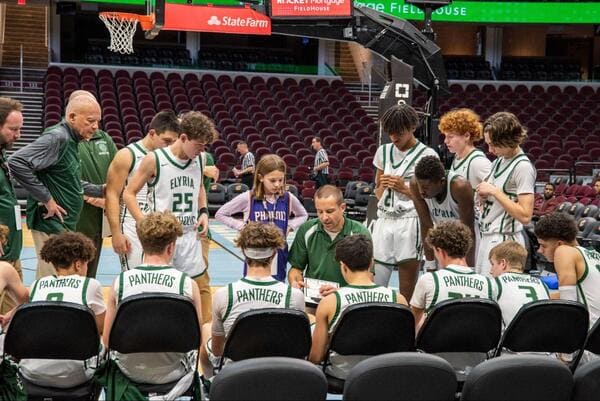
Timeout use is a mix of art and science. We are going to cover the science. Specifically, we are going to look at good reasons to use a timeout.
The art comes in deciding whether you actually pull the trigger. While these are all good reasons, they don’t mean you have to use a timeout.
That decision comes from your knowledge of your team.
Does your team have strong player leadership that can recognize and address issues in real time? If so, you may not need to use timeouts as often.
Is your team young and inexperienced? In that case, you may be more proactive in using your timeouts.
You are the best judge of that. When you combine your unique knowledge of your team with an understanding of effective timeout use, you will be in a position to influence your team during games positively.
Timeout Mastery: 7 Situations That Warrant a Timeout
Here are some times when a timeout is warranted.
-
To stop an opponent’s run
Dickie V would approve. One of the most common reasons coaches use a timeout is to stop an opponent’s run.
This is a good reason. Coaches debate the reality of momentum, but when you’re on the bad end of a run, it certainly feels real.
During a run, your players often try to make a great play. They want to score a 10 point basket.
This urge is okay. They want to help the team. However, we know that it often leads to bad decisions (bad shots, forced drives, etc.)that end up extending the run.
If you see your players playing outside themselves or getting rattled, a timeout may be necessary. It gives you a chance to calm them down. Sometimes, a few deep breaths are sufficient.
You can refocus them mentally and provide tactics to stop the run.
Also, just making the opponent stop playing can help diffuse the run.
There may be times you want to go with the Phil Jackson approach and see if your players can right themselves. That’s up to you. But know that stopping a run is a really good reason to call a timeout.
-
End of quarter situation
How you manage the end of quarters can go a long way towards determining the outcome of a close game.
If you can score a couple of baskets at the end of a quarter, those 4-6 points can be the difference between winning and losing.
Calling a timeout to draw up or call a play is good timeout usage. You can get your players in the correct positions. You can make sure everyone is on the same page. You can remind them of when you want to shoot the ball - generally around :05, so you can get an offensive rebound, but your opponent won’t get a good shot.
Done successfully, a basket to end the quarter can help build momentum going into the next period.
-
To substitute
I coached a game a couple of years ago in which our best player was on the bench, resting. I sent him to the scorer’s table to re-enter the game.
From the time he went to the table until the dead ball, 2:30 of game time elapsed. During this time, we were losing ground to our opponent. I was debating whether to call a timeout. I didn’t, believing a whistle had to be coming any second.
I was wrong. By the time we got him back in the game, the deficit had grown to a point we couldn’t overcome.
While I made a bad decision that night, I did learn from it.
There are times when you need to call a timeout to get the right players in the game. Don’t rely on the refs to create a subbing situation.
If it’s a critical point of the game, take it into your own hands.
Of course, if you do this, you’ll never know how much longer the player would have waited at the scorer’s table. That can only be known if you don’t do it.
At winning time, don’t leave that to chance. Take a timeout to make sure you have your best players in the game.
-
To change tempo/strategy
Strategic changes are a good reason to call a timeout. Sometimes you see a game going bad, and you need to make a change now.
Timeouts are a good way to do this. Maybe you want to change from man to zone. Or you want to go from half court defense to pressing.
Yes, you can do those things in live play. But sometimes a timeout is preferable as it gives you a chance to provide reminders and coaching points about the new strategy.
Making the change in a timeout, as opposed to during live play, also gives you the element of surprise. Your opponent doesn’t hear you changing your strategy (as they might be doing it during live play). Thus, you might catch them off guard and unready for your new tactics.
-
To change your team’s energy
When you are around your team every day, you start to sense their mood. You get a feel for when they are ready to play and when they aren’t.
Why do you think Greg Popovich called a timeout :16 into a game? I am sure it wasn’t for strategic reasons.
A lack of energy is a good reason to call a timeout. Sometimes you may want to sub. Former North Carolina coach Roy Williams was known for subbing 5 for 5 if energy was lacking.
Sometimes you may need to give them some firm words of redirection. How you deal with it is up to you.
The choice to deal with it is where the timeout comes in. When energy is lacking, a timeout can send a strong message.
-
If your team is tired
This often comes down to depth. If your players are fatigued, there are a couple of ways to deal with it.
If you have depth, subbing is a good way. It allows you to save your timeouts while keeping fresh legs on the floor.
However, you don’t always have depth. I recently watched one of the better teams in our area play. They had five outstanding players and not much else. Those five players played about 95% of the minutes.
Their coach used two timeouts during the game just to allow those guys to catch their breath. He knew that he couldn’t afford to sub his starters.
So he used timeouts to allow them to catch their breath. This allowed him to keep them on the floor and put his team in position to win.
If your team is similar, you might need to use timeouts to keep your players fresh.
-
To protect your culture
While I saved this for last, it is as important as any other reason. You have standards for your team. When they aren’t being met, a timeout is warranted.
Some of your standards may relate to effort. Or they might relate to showing respect to opponents and officials.
If your players aren’t doing those things, a timeout is a good way to address it.
If it’s just one player, maybe you sub them and deal with them individually. But if it’s happening with multiple players, a timeout is needed.
Those sorts of issues need to be confronted immediately. Don’t wait until the end of the quarter or half.
By taking a timeout, you show your team how important your culture is to you. Reminding your players that ‘this is not who we are’ is something you have to do at times.
When players are not meeting the standard, don’t ignore it. Deal with it - now!
1 Terrible Time To Call A Timeout
As you can see, there are many good reasons to use a timeout. However, there are also bad reasons. Knowing how important timeouts are, you can’t waste them.
Here’s one common misuse of timeouts that you want to avoid . . .
To vent at your players
You’re human. You are going to get upset about things you see your players do. That’s part of coaching.
However, calling a timeout to unload your emotions on your players is poor coaching.
-
First, you are modeling the exact behavior you wouldn’t accept from your players. I’m reminded of Will Ferrell in “Old School” yelling uncontrollably to his players “We have to keep our composure.”
If you aren’t in control of your emotions, how can you ask your players to be?
-
Second, you aren’t using the timeout to make things better. You might be happier for having said your piece, but are your players in position to play better? Did you give them tools to correct their play? Or did you just scream at them?
This isn’t to say you will never get on your players or raise your voice. You will. But do it strategically and with forethought. Do it to produce a response, not to make yourself feel better. And don’t overdo it - or else players will tune it out.
Timeouts are too important to waste on your emotions. Use them to make your team play better, not to make yourself feel better.
Conclusion
I’ve heard coaches say timeouts are like gold. They are that valuable.
If that’s the case, we must use them with care. Sometimes, timeouts are taken to address technical and tactical issues. Other times, they are taken to address mental and emotional issues.
Done correctly, you can use your timeouts to give your team an advantage during a game.
If you do that, you’re well on your way to being a good game coach!
|
|||||



 Facebook (145k Followers)
 YouTube (152k Subscribers)
 Twitter (33k Followers)
 Q&A Forum
 Podcasts