
How to Fix a Broken Jump Shot (Without Starting Over)
We’ve all coached or been the player who suddenly “loses” their shot. One week the ball feels perfect leaving your hand. The next week — it’s off left, off right, or barely grazing the rim.
When that happens, most players panic. They go to the gym, take hundreds of shots, and try to “shoot their way out of it.” Unfortunately, that often makes things worse.
Instead of starting over, here’s how to rebuild your shot the right way — one small fix at a time.
5 “Small” Shot Fixes That Yield “Big” Results
1. Find Your Shot Line
Start by filming 10–15 free throws from the front and side. Look for two simple things:
-
Is the ball lined up with your shooting eye and the rim?
-
Is your follow-through finishing straight at the basket?
If your elbow flares out or your wrist finishes sideways, your shot line is off. Try this:
-
Hold your follow-through for 2 seconds.
-
Make sure your index and middle finger are pointing at the center of the rim. That one cue alone will correct a surprising number of “broken” shots.
2. Fix Your Base Before Your Form
Most shooting problems start from the ground up — not the release. A narrow stance or off-balance base kills rhythm and consistency.
Try this quick reset:
-
Start every rep with your feet shoulder-width apart.
-
Keep your knees slightly flexed and your weight on the balls of your feet.
-
As you shoot, let your legs and arm move together — straight up and through the target.
If your shot feels “flat,” it’s often because your legs and arms aren’t working in sync.
3. Get Your Power Timing Right
Many players “use their legs” — but at the wrong time. They bend early, release late, and the power from their lower body is gone by the time the ball leaves their hands.
So while your legs are important, syncing up your lower and upper body is more important.
Try this simple rhythm cue:
-
As the ball reaches your set point (around your forehead), that’s when your legs should begin extending.
-
The jump and release happen together — not one before the other.
Watch Steph Curry or Damian Lillard in slow motion. You’ll notice their feet are still on the floor when the ball reaches their set point. That’s how they save leg power for the actual release.
4. Build Confidence with “3-Make Streaks”
When your shot is off, confidence disappears fast. The fix? Shrink your focus and stack small wins.
Instead of counting makes out of 10, go for streaks of 3 in a row from key spots:
-
Free throw
-
Left wing
-
Right wing
-
Top of the key
-
Short corner
Once you make 3 in a row, move on. You’ll rebuild rhythm and confidence faster without overthinking.
5. Add Game Speed Reps Last
Once your form feels consistent at 50–60%, it’s time to bring it back up to speed.
Use this simple 3-step progression:
-
Form Shooting (10 reps per spot) – Focus only on mechanics.
-
Catch & Shoot (10 reps per spot) – Add game pace and rhythm.
-
1-Dribble Pull-Up (5 each side) – Test your form under movement.
By layering drills this way, your old muscle memory resets — and your confidence grows.
Want a Better Shot?
Fixing a broken shot doesn’t mean tearing everything down. It’s about small, focused adjustments — from your base to your timing — and building back your rhythm one make at a time.
Remember: Consistency beats perfection.
If you want a complete system to rebuild your shot and add advanced scoring moves, check outCoach Jim Huber’s Shooting & Scoring System.
And, if you want elite hands-on instruction in the skill of shooting, check out our Breakthrough Basketball Camps. Our camps teach shooting right, building habits that serve campers well for years to come!
Gain the Edge to
Stand Out on the Court
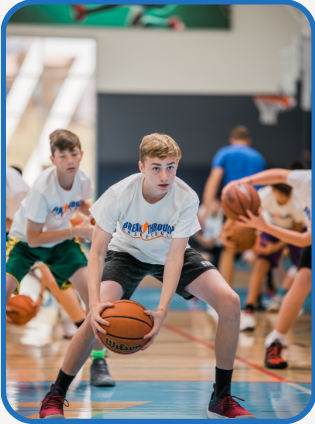
Breakthrough Basketball Camps help players improve their skills and decision-making while building the confidence to shine on and off the court. Trusted by over 150,000 players nationwide, our camps provide:
-
Experienced coaches who know how to teach every level
-
Skill development in shooting, ball handling, and all-around play
-
Game-like situations that build confidence under pressure
-
A positive, motivating environment parents can feel good about
-
Beginner, Youth, and Advanced Camps - Ages 6 to 18
|
|||


 Facebook (145k Followers)
 YouTube (152k Subscribers)
 Twitter (33k Followers)
 Q&A Forum
 Podcasts