
The 9 Habits Of Highly Effective Teammates
A few years ago, I coached a player named Jack. He wasn’t our leading scorer. He wasn’t the best athlete. He didn’t play the most minutes.
But every coach on our staff would have taken a team full of Jack’s in a heartbeat.
One game in particular stands out. Jack only played about ten minutes that night… yet after the game, our starting point guard told me, “Coach, we wouldn’t have won without Jack tonight. His energy was the difference in the game.”
Why?
Because in those ten minutes, Jack sprinted the floor, communicated every possession, and played his role perfectly. And for the other 22 minutes, he encouraged teammates, stayed locked in on the bench, and brought energy every time someone subbed out.
He wasn’t our star.
But he made everyone around him better.
That’s what great teammates do — and it’s one of the most valuable skills you can develop as a basketball player. (Not to mention, it’s a great way to earn more playing time.)
Talent underachieves without teamwork. Chemistry wins games. And coaches at every level (middle school, varsity, college) always look for players who lift the team and are their “glue” players
Here are nine ways you can become that kind of teammate.
Becoming a Glue Player: 9 Traits of Great Teammates
1. Be On Time
Being on time isn’t about clocks — it’s about respect. Coaches notice who shows up early and ready. It’s not enough to walk through the door on time. Great teammates are prepared to compete from the moment practice begins.
Teammates and coaches trust those players more. If practice starts at 3:00, you’re ready by 2:50.
Championship habits start with simple discipline.
2. Be Prepared
Bring the right shoes. Bring water. Bring your practice gear. Bring a mindset ready to work. Nothing frustrates a coach more than a player who forgets their shoes or practice jersey.
Great teammates show up mentally and physically prepared, so they don’t slow the team down. Preparation communicates, “I care.”
3. Be Coachable
Coachable players listen, adjust, and try to apply feedback — even when it’s hard. You don’t roll your eyes, talk back, or shut down.
Coaches don’t expect perfection. They expect willingness.
Great teammates don’t view feedback as a threat. They use it as a tool to improve.
4. Be Committed
Jerry West once said, “You won’t get much done in life if you only work on the days when you feel good.”
Commitment isn’t about what you do when you feel good. It’s about what you do on the days you don’t.
Great teammates:
Sprint in every drill
Show up consistently
Give effort, whether they’re tired or energized
They don’t do it because they feel like it. They do it because it’s who they are. Commitment builds trust.
5. Accept Your Role
Not everyone can be the leading scorer. Not everyone can start. Not everyone gets the same number of shots.
Accepting your role doesn’t mean you stop improving — but it means you don’t complain, pout, or create tension. You embrace what helps the team succeed today.
Players who fight their roles hurt teams. Players who accept roles help teams win.
6. Excel in Your Role
Once you accept your role, dominate it.
If you’re a defender, become a lockdown monster.
If you’re a screener, set the best screens in the gym.
If you’re a rebounder, crash every possession.
If you come off the bench, bring instant energy.
When you excel in your role, your minutes grow and your role expands.
Coaches trust reliability. Show them you can handle your current role, and they’ll put more on your plate.
7. Bring Positive Energy
As author Jon Gordon reminds us, “Energy is contagious — are you a germ or a big dose of vitamin C?” The good news is, your energy is 100% within your control.
Great teammates bring:
High-fives
Encouragement
Hustle
Loud communication
Enthusiasm
Positive energy transforms practices and games. It also makes you a leader without saying a word.
8. Have a Good Attitude
Bad attitudes spread fast.
A strong attitude means:
You don’t sulk after mistakes
You keep playing hard.
You stay focused on the next play.
You don’t let emotions control you.
A good attitude is a competitive advantage. Choose to show one daily!
9. Encourage Your Teammates
This might be the biggest one.
A simple “good shot,” “next play,” or “you got this” goes a long way. Every great teammate makes others feel more confident. Encouragement lifts people in ways scoring never will.
If you don’t get many minutes, encouragement is your impact. If you’re the star, encouragement shows humility and leadership.
When a teammate screws up, fight the urge to pile on. They already know they messed up. Instead, try calling them UP instead of calling them OUT!
Conclusion
Not every player can score 20 points.
Not every player can start.
Not every player gets headlines.
But every player can be a great teammate.
And here’s the truth:
Coaches play great teammates.
Teammates follow great teammates.
Teams win because of great teammates.
Be like Jack.
Be someone every coach trusts.
Be someone every teammate wants to play with.
Be the kind of player who makes everyone around them better.
That’s how you transform yourself — and your team.
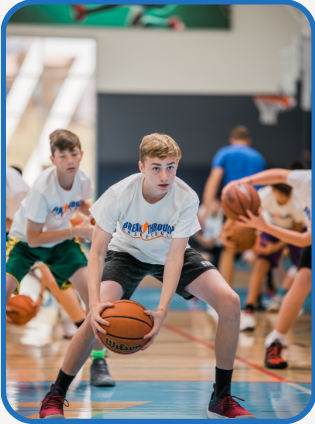
Being a great teammate is too important to leave to chance. That’s one of the reasons we focus on the habits of great teammates at our Breakthrough Basketball Camps. At our camps, we develop great players & great teammates. That way, when you get back to your team, you have the skills & attitudes necessary to help your team.
Learn more about Breakthrough Basketball Camps below and find one near you!
Gain the Edge to
Stand Out on the Court
Breakthrough Basketball Camps help players improve their skills and decision-making while building the confidence to shine on and off the court. Trusted by over 150,000 players nationwide, our camps provide:
-
Experienced coaches who know how to teach every level
-
Skill development in shooting, ball handling, and all-around play
-
Game-like situations that build confidence under pressure
-
A positive, motivating environment parents can feel good about
-
Beginner, Youth, and Advanced Camps - Ages 6 to 18
|
|||


 Facebook (145k Followers)
 YouTube (152k Subscribers)
 Twitter (33k Followers)
 Q&A Forum
 Podcasts