
Baseline Out-of-Bounds Masterclass: 3 Must-Have Plays
Every coach knows the feeling. The game is tight… you’re inbounding from the baseline… and you need a great shot. Not a hope-and-pray look. Not a last-second scramble. A high-percentage scoring opportunity you trust.
That’s why having a handful of reliable, well-designed baseline out-of-bounds plays is so important. Great BLOBs can swing momentum, stop a run, or flat-out win you games. And the best ones don’t rely on trickery — they rely on sound spacing, smart screening, and multiple options that force the defense to make mistakes.
In this article, we break down three proven BLOB actions from elite coaches Ryan Schultz, Tim Schuring, and Danny Miles. These aren’t gimmicks. They’re clean, purposeful sets used at high levels to generate layups, slips, and wide-open threes.
You’ll see:
A box set with layered screening that creates multiple scoring reads
An offset box with screen-the-screener action and a built-in slip counter
A triangle alignment that frees your best shooter with back-to-back stagger screens
Each play is diagrammed clearly so you can add it to your playbook immediately.
If you want dependable baseline actions you can run in pressure moments, these three should be near the top of your list. Let’s dive in.
3 BLOB Concepts That Create High-Percentage Shots
Play 1 Box 1
Source: The Hybrid Attack Offense with Ryan Schultz
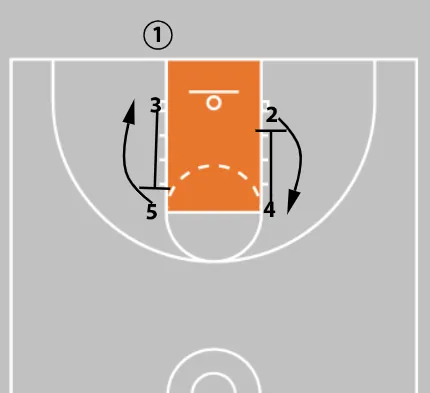
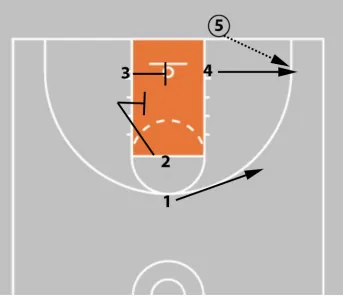
Players start in a box set.
Player 4 sets a back screen for 2.
Player 3 sets an up screen for 5, who dives to the basket before widening out.
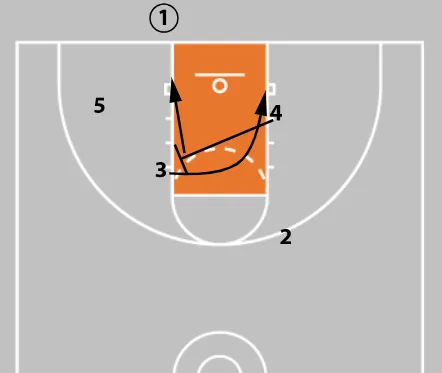
4 sets a diagonal screen for 3, who dives to the opposite block.
4 slips to the rim.
1 looks to 3, then 4.
If neither is open, 2 is the safety option.
Play 2 - Feet Together
Source: The Complete Offensive System with Tim Schuring
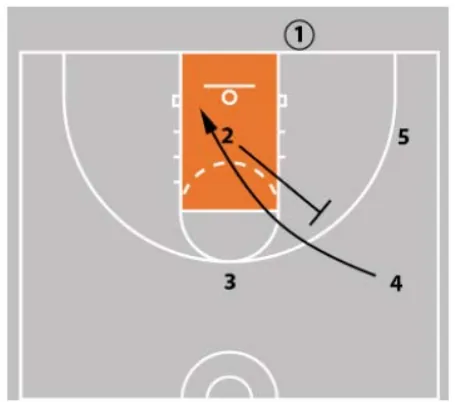
Players start in an offset box.
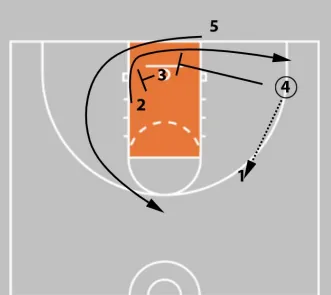
Play 2 sets a diagonal back screen for 4.
4 cuts to the opposite block. If open, 1 should pass to 4.
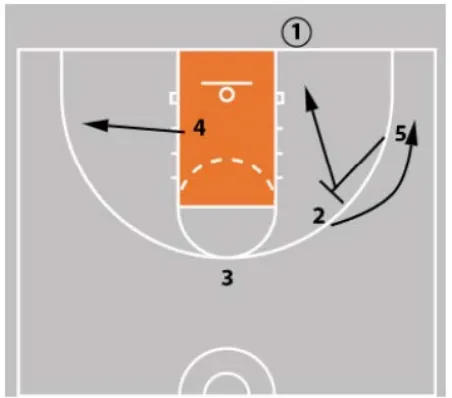
5 sets a pin screen for 2. 2 cuts to the corner for a jump shot.
5 then slips to the rim. If the defense switches, 5 should be open.
4 widens out to leave space at the rim for 5’s cut.
3 is the safety option.
Play 3 - Stack 2
Source: The Coaching System With Danny Miles
3 & 4 start on the blocks. 2 & 1 stack at the free throw line.
Player 4 pops out to receive the inbounds pass from 5.
3 & 2 move towards the opposite block.
1 cuts to the ball side wing.
4 reverses the ball to 1.
5 sprints off a stagger screen from 2 & 3. 1 looks for 5.
After screening for 5, 2 sprints off a second stagger screen from 3 & 4.
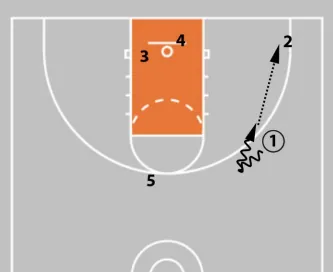
If 5 isn’t open, 1 can fake to 5 before passing to 2 in the corner.
Conclusion
Points off Baseline Out-of-Bounds can be the hidden difference in close games. A few well-designed, well-rehearsed BLOB sets can consistently produce 4–8 extra points per night — often the margin between winning and losing. These three plays are proven, efficient, and adaptable to nearly any roster.
Install them now, and your team will reap the benefits all season long.
|
|||


 Facebook (145k Followers)
 YouTube (152k Subscribers)
 Twitter (33k Followers)
 Q&A Forum
 Podcasts