
How State Champion Coach Ryan Schultz Busts the 2-3 Zone: 3 Go-To Plays
If your team struggles against a 2-3 zone, you’re not alone. According to several high school analytics programs, zone defense reduces offensive efficiency by 8–15% for the average team—mainly because players stop creating advantages and start settling for low-percentage shots.
The good news? Coaches who implement simple, structured zone-offense actions—like overloads, blind cuts, and on and off-ball screens—can flip those numbers completely. When you challenge the defense at multiple levels, clean shots start to appear everywhere.
Below, you'll find three diagrammed plays from 2x Iowa State Champion Coach Ryan Schultz that are specifically designed to force breakdowns in a 2-3 zone.
These plays come from Coach Schultz's Complete Zone Offense Blueprint, which gives you plays and tactics to attack every type of zone!
Add them to your playbook, and you’ll have your opponent pulling out of the zone before you know it!
3 Proven Plays to Beat a 2-3 Zone
Play 1 - Stack
1 starts with the ball up top.
2 & 3 stack at the free throw line.
4 and 5 are in the short corners.
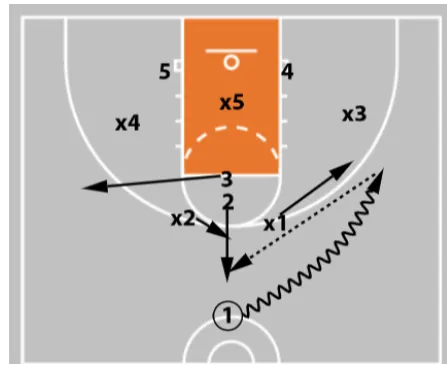
1 dribbles to the wing, pulling x1 with them.
2 pops to the top and receives a pass from 1.
3 pops out to the opposite wing.
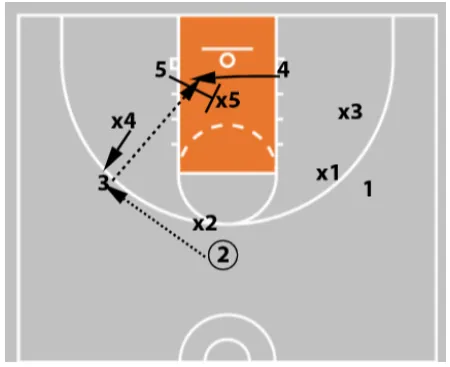
2 reverses the ball to 3. The quick reversal forces x4 to come out and guard 3.
On the pass to 3, 5 screens x5.
4 flashes across the lane and receives a pass from 3 for the layup.
Play 2 - Shallow
1 starts with the ball up top.
2 & 3 are on the wings.
4 & 5 are in the short corners.
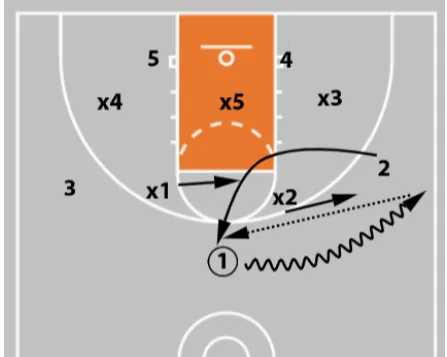
1 dribbles at the wing, bringing x2 with them.
2 makes a shallow cut to the top.
1 passes to 2. Because x2 had to guard 1, x1 must step up to guard 2.
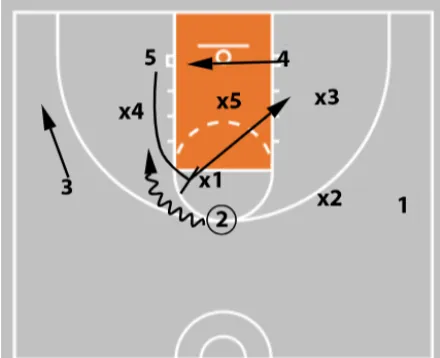
As the ball is in the air to 2, 5 sprints up and sets a ball screen.
2 attacks off the ball screen.
As that’s happening, 4 moves behind the zone to the ball side.
5 rolls to the opposite side.
3 drifts to the corner.
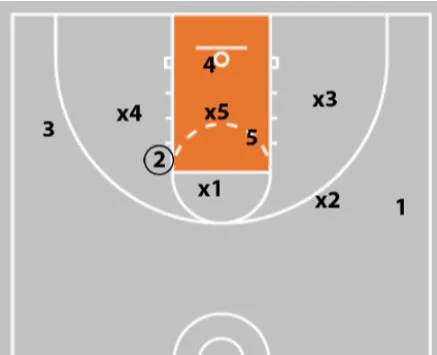
Coach's note: 2 has multiple options. If no one steps up, they can shoot. If x5 steps up, they can pass to 4 at the rim. If x4 helps in, they can pass to 3 for a jumper.
Play 3 - X Counter
1 starts with the ball up top.
2 & 3 are on the wings.
4 & 5 are in the short corners.
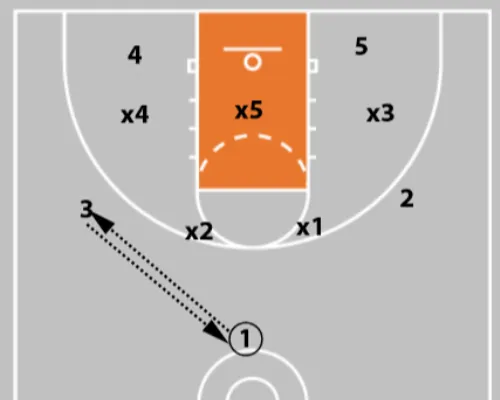
1 passes to 3.
3 immediately passes back to 1, making the defense shift.
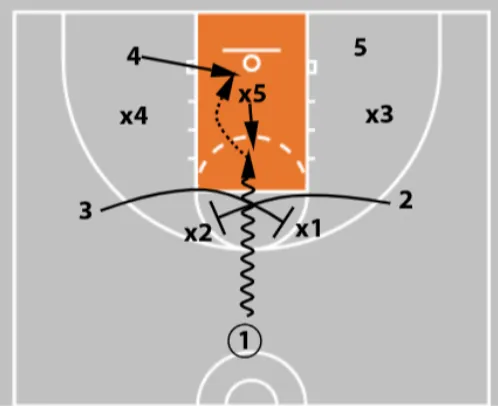
2 & 3 sprint across the lane and screen x1 & x2 on the inside, creating a path down the middle for 1.
1 attacks the gap created by the screens.
If x5 steps up to stop 1’s drive, 1 looks to hit 4 behind the zone. This can be a lob or bounce pass, depending on age and player attributes.
If x5 stays at the rim, 1 can stop and pull up just inside the free throw line.
Conclusion
A 2-3 zone only becomes a problem when your offense stays passive. The moment you stretch it horizontally, confront it vertically, and force defenders to choose between two bad options, gaps begin to open everywhere.
The three plays above give you a simple, repeatable framework that any team—youth through varsity—can use to create rhythm, open shots, and confident attacks.
Start layering these actions into your practices, teach your players where the advantages appear, and you’ll quickly see the zone shift from something you fear… to something you welcome.
Your players deserve an offense that helps them think, read, and play with purpose. These zone solutions can get you there. Learn more about the Complete Zone Offense Blueprint with Ryan Schultz.
|
|||


 Facebook (145k Followers)
 YouTube (152k Subscribers)
 Twitter (33k Followers)
 Q&A Forum
 Podcasts