
The Cool Phrase That Will Warm Up Your Offense
Like many youth teams, my daughter’s 5th-grade team runs a simple, 5-out, pass & cut offense.
There are a lot of reasons to use this offense:
It leaves space at the rim
It teaches positionless basketball
-
It provides natural floor balance and spacing
It’s easy to learn
It’s easy to add progressions to
However, as with any offense, there are tradeoffs. The biggest tradeoff of a 5-out alignment is that it leaves you with single gaps.
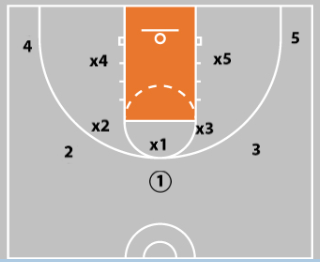
As you can see in the diagram, 1 has little space to drive.
That’s why cutting is so important. It temporarily creates a double gap for a player to attack.
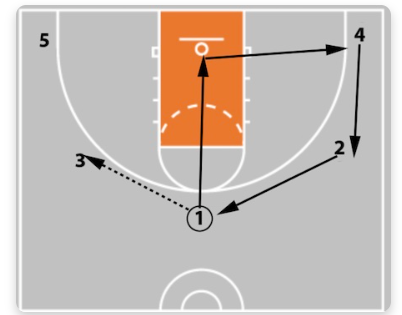
Here, 1’s cut creates a double gap for 3 to attack.
And yet, most teams aren’t able to exploit it. Why? The blame lies with player 2.
A Well-Intentioned Mistake That Kills Driving Lanes
Most of our players want to please. That’s a good thing. However, this is one instance where it can go too far.
Your players know they are supposed to fill the open spot created by the cut. Unfortunately, most do it too soon.
They are sprinting to the open spot as soon as the cutter starts their cut. While this might sound good, it creates a couple of problems.
-
It takes away the double gap.
-
It doesn’t give the player with the ball time to look at the cutter before looking to the player filling.
-
It results in the filling player arriving early and becoming a stationary target rather than catching the ball on the move.
All three of those lessen your chances of scoring.
The good news? There’s a simple fix.
Why “No Chill” Doesn’t Apply To Basketball Offense
“No Chill” is slang for someone who is very intense. Shouldn’t we want that from our players? In certain circumstances, yes.
However, when running offense, chilling has its place.
With my daughter’s team, we started telling players to “Chill before you fill.” This concept comes directly from Youth CLA Drills With Dave Lepisto.
The idea is this - wait :01-:02 before filling the open spot. By doing so, you solve the three problems above:
-
The player with the ball has sufficient time to attack the double gap.
-
The player with the ball has sufficient time to look at the cutter
-
The player filling is now more likely to catch the ball dynamically, making them better able to attack the basket.
This phrasing is a good example of sticky language. Sticky language is short, memorable phrases that players can return to again and again.
Since we’ve started “chilling,” our offense has taken off. We’ve taught the players to immediately attack the double gap if the cutter isn’t open. Because their teammate is chilling, they have time to do both.
Basketball Offense, Nave SEAL Style
The Navy SEALS say, “Slow is smooth. Smooth is fast.” Yes, your offense should have pace. But it should also have a purpose.
Teaching your players to chill before they fill is a great way to create both.
Add that phrase to your team vocabulary and watch your squad start scoring more! For more great teaching points, be sure to check out Youth CLA Drills With Dave Lepisto!
|
|||||



 Facebook (145k Followers)
 YouTube (152k Subscribers)
 Twitter (33k Followers)
 Q&A Forum
 Podcasts