
Half Court Havoc: 7 No-Press Ways To Create Turnovers
A couple of winters ago, we beat a team that was quicker at all five spots… and we never pressed once. Not only that, but we were down a starter, stretching our already thin bench.
As much as I wanted to press, a full-court press would’ve been coaching malpractice. And yet, I felt that if we played them traditionally, we’d be doing them a favor. We needed to find a way to force turnovers and create some easy baskets without overextending our defense.
So we changed the question: instead of “How do we pressure 84 feet?” we asked, “How do we create chaos in 24 feet?” We came up with a handful of ways that we “pressure without pressing.” By the fourth quarter, their best ball handler was avoiding the ball, and their coach had burned three timeouts to salvage half-court possessions.
We didn’t win with speed. We won with surprise and discipline—and we created turnovers without pressing. Read on to learn how you can do the same.
In this article, you’ll learn:
-
The two general strategies that cause turnovers
-
How to make them “automatics” for your team
-
7 specific tactics that you can install quickly and easily
2 Turnover Causing Tactics That Never Go Out Of Style
There are two primary ways to force turnovers in basketball.
What’s GOOD about that is you can focus most of your turnover-creating energy on just two areas. That allows you to get good at them.
What’s GREAT about that is that there are countless ways to use those tactics, keeping them fresh and your opponent off-balance.
And once your players know them, they can do them automatically. In other words, you don’t have to “call” most of the tactics below. You can simply make them part of your half-court defense.
Win Possessions Without Full-Court Pressure: 7 Ideas
-
Trap Every Pass To The Corner
Where’s the best spot on the court to trap? The corner. Make a rule that on every (non-skip) pass to the corner, the passer’s defenders go and trap.
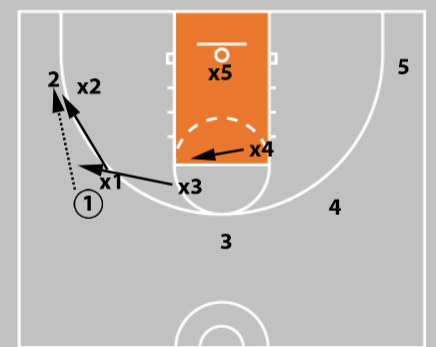
This puts the offense in a bad spot and creates simple rotations for your defenders.
-
Trap All Ball Screens
In the last few years, I’ve seen two primary ball screen coverages:
Switch
Drop
Those two coverages are used the overwhelming majority of the time. Neither puts much pressure on the dribbler.
Why not trap? You already have two defenders at the ball, making it a natural time to trap. Additionally, the ball is being dribbled (as opposed to held), increasing the chances of a misplay.
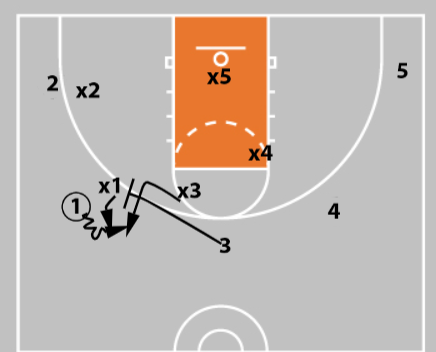
Make sure the on ball defender goes over the screen. The player guarding the screener must come up aggressively and not allow the dribbler to continue in the same direction. As the trap is being set, stress getting hands up to deflect the pass out of the trap.
-
Attack Spin Dribbles
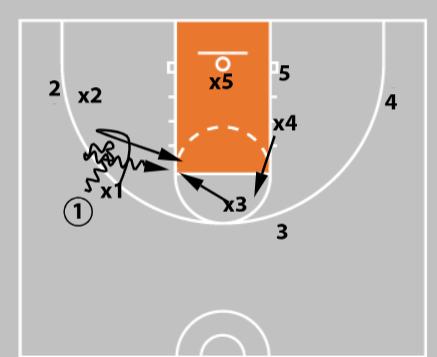
There is a place for the spin dribble. That place generally isn’t tight spaces in the half-court. Why? Because it leaves the dribbler blind to the area they are turning into.
Exploit that by trapping spins. Send the next play from the direction the ball is spinning towards to attack the ball. When the dribbler turns and sees a 2nd defender running at them, they often travel or throw the ball away.
-
Play Aggressive “Dork” Defense
I’ve heard coaches talk about “dork” defense. The term "dork" refers to someone unskilled. Many coaches choose not to guard that player. That is a great strategy.
However, if you want to force turnovers, get aggressive when the dork gets the ball. How? By automatically face guarding the other four players when the dork gets the ball.
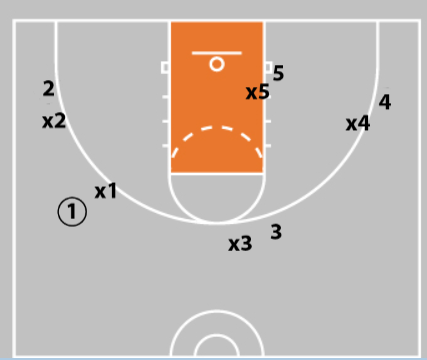
When you deny everyone else, you make the dork make a play. What does that often result in? A turnover or a wild shot.
-
Trap Out Of Bounds Plays
Out of bounds plays are great defensive opportunities. They allow you to employ tactics that take the offense out of their play and create chaos.
Trapping is one way to do that.
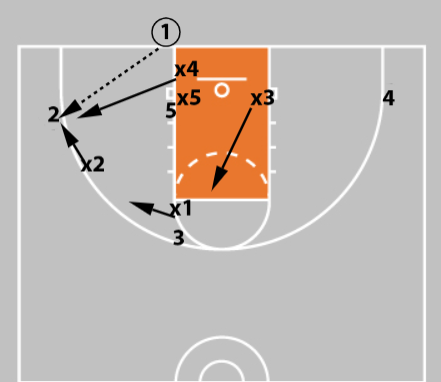
For baseline out of bounds, use a 1-3-1 formation. Invite the ball to the corner. Immediately trap with the defender on the ball and the wing defender. (If the ball is inbounded anywhere else, simply match up).
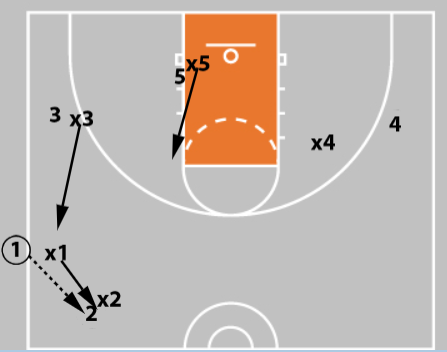
For sideline out of bounds, match up. Have the defender on the ball immediately go and trap the inbounds pass (as long as it’s not thrown into the weak side).
-
Deny Out Of Bounds Plays
If you don’t want to trap, deny. Think of it like this. An inbounds is similar to a dead dribble. The player with the ball can’t move. They only have :05 to make a pass.
Have the player on the ball read the inbounder's eyes and be as disruptive as possible. The other four players should switch all screens and face guard, trying to force a bad pass or :05 violation.
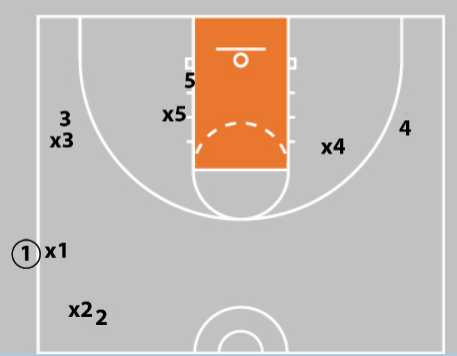
You can do this on the side or underneath. At best, you force a turnover. At worst, you take the offense out of their play.
-
Peel Switch
Peel switching has become more popular in recent years. It is a defensive concept in which a defensive player, once beaten, peels off. They don’t try to get back in front of their player.
Another defender steps in and takes their player. They then peel off to the offensive player who is left open.
Where do the turnovers come in? Often, the driver will kick the ball to the offensive player who looks open. Part of the reason they look open is that the defender “peeling” off to them is out of their line of vision.
This creates opportunities for the peeling defender to steal that pass.
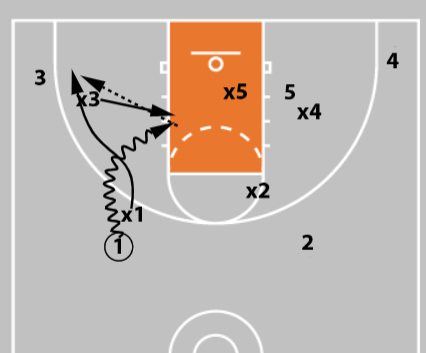
In this case, x1 is beat. X3 steps in to help.
Instead of trying to get back in front of 1, x1 peels off to 3 in the corner. When 1 throws the kick out pass, x1 is in position to steal it.
Never Let Your Opponent Settle In
When you use the tactics above, your opponent never gets comfortable. Against a press, teams start to anticipate traps and rotations.
With these strategies, your defense remains unpredictable. That makes your opponent tentative and indecisive. And what do tentative and indecisive players do - make bad decisions, which leads to good outcomes for you!
If you’re looking for an entire half court trapping system, check out The Buzz Defense.
|
|||


 Facebook (145k Followers)
 YouTube (152k Subscribers)
 Twitter (33k Followers)
 Q&A Forum
 Podcasts