

Use Kid-Friendly Criticism to Help Players Improve (Without Shutting Them Down)
Criticism is essential in coaching.
Players don’t improve without feedback. Mistakes need correcting. Habits need refining. Too many coaches don’t correct players for fear of hurting their feelings.
But here’s the conundrum…
Criticism can either fuel improvement or demoralize a player to the point that they can’t learn.
It reminds me of the quote: “They don’t care how much you know until they know how much you care.”
If players don’t believe you’re in their corner, criticism feels like rejection. When that happens, kids shut down.
If they do believe you’re in their corner, criticism feels like coaching.
That said, providing critical feedback to kids is different than giving it to adults. That’s where the following tactics come in.
They give youth basketball players useful information they can apply immediately — without sapping their motivation and confidence.
Add them to your toolkit and see how your players respond to your feedback better!
5 Kid-Friendly Criticism Tips Every Youth Coach Should Use
1. Avoid Non-Teachable Moments
Not every moment is the right moment for correction.
After:
A tough loss
A costly turnover
A missed free throw at the buzzer
An emotional mistake
Players are often so emotional that they cannot hear anything constructive.
Even well-delivered feedback won’t land.
Discipline yourself:
Let emotions settle.
Revisit the teaching point later.
Choose a calm moment in practice.
Timing matters just as much as wording. Here’s how Jim Huber suggests doing this well as part of The Youth Coaching System:
2. Praise in Public. Criticize in Private.
Public embarrassment crushes confidence.
If you need to correct:
Pull the player aside.
Lower your voice.
Keep it calm and specific.
When you praise:
Let teammates hear it.
Reinforce effort and growth openly.
Another way of saying it is, “Shout praise, whisper criticism.”
This simple rule builds trust fast. And trust makes it easier to accept correction.
3. Ask Permission
This is an underrated tool, especially with kids. Kids often have to hear criticism whether they want to or not. Giving them some say in the matter is empowering and opens them up.
Instead of launching right into a correction, try asking:
-
“Hey, I noticed something that might help your shooting. Are you open to hearing it?”
When players say yes:
They’re mentally prepared.
They’re more receptive.
They feel respected.
If they say no:
Honor it. This can be hard, but you must respect their decision.
Revisit later.
Most of the time, their curiosity will drive them come back to you later.
(Important: Don’t use this approach for urgent safety or sportsmanship issues. Those require immediate correction.)
4. Use If–Then Statements
Telling players what to do often triggers resistance.
Instead of:
“Pass the ball!”
“Finish strong!”
“Cut harder!”
Try:
-
“If you move the ball early in the possession, then you are more likely to get it back later”
-
“If you cut hard, you’ll likely be open for a layup.”
Why this works:
It puts the player in control.
It explains the benefit.
It connects action to outcome.
Kids respond better when they understand the “why.”
5. Use the Criticism Sandwich
The “Criticism Sandwich” is simple:
Positive → Correction → Positive
Example:
-
“I love how you’re keeping your eyes on the rim. If you bend your knees a little more, you’ll get better range. And great job finishing high with your follow-through.”
Why is this effective?
You reinforced something they’re doing well.
You corrected something specific.
You ended on encouragement.
That’s three teaching points — without being discouraging.
Why This Matters for Youth Basketball Coaches
At the youth level, especially, players are:
Still building confidence
Still developing emotionally
Still forming their identity
If correction consistently feels negative, they shut down. Long term, they quit.
If correction feels like support, they lean in. They want to come back for more.
Remember, you’re not just teaching basketball skills.
You’re teaching resilience.
You’re teaching how to handle feedback.
And that’s way bigger than basketball.
A Final Challenge
Before your next practice, ask yourself:
Do my players know I believe in them?
Do they feel safe making mistakes?
Does my criticism build them up — or break them down?
Correction is necessary.
But how you deliver it determines whether it produces growth, or shuts it down.
Give feedback in a way that combines truth and caring. That’s how players improve.
Experience This at a Breakthrough Basketball Camp
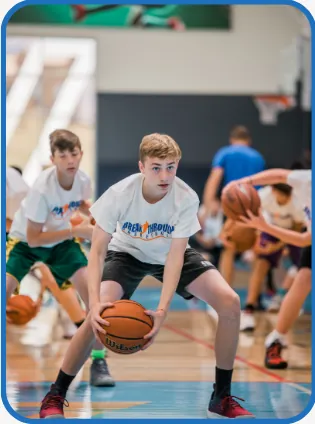
At Breakthrough Basketball Camps, we believe players improve the fastest in an environment where they feel confident, supported, and challenged appropriately.
Our coaches use kid-friendly criticism every day.
We correct mistakes without crushing confidence.
We teach with clear, actionable feedback.
We build players up while helping them improve.
We create an atmosphere where effort, learning, and growth come first.
Campers leave not only as better players, but as more confident competitors who understand how to respond to coaching and apply feedback the right way.
If you want your player to experience high-level instruction in a positive and productive learning environment, check out an upcoming Breakthrough Basketball Camp near you.
It’s a place where players grow — on and off the court.
Gain the Edge to
Stand Out on the Court
Breakthrough Basketball Camps help players improve their skills and decision-making while building the confidence to shine on and off the court. Trusted by over 150,000 players nationwide, our camps provide:
-
Experienced coaches who know how to teach every level
-
Skill development in shooting, ball handling, and all-around play
-
Game-like situations that build confidence under pressure
-
A positive, motivating environment parents can feel good about
-
Beginner, Youth, and Advanced Camps - Ages 6 to 18
|
|||


 Facebook (145k Followers)
 YouTube (152k Subscribers)
 Twitter (33k Followers)
 Q&A Forum
 Podcasts